Showing posts with label Theodore Payne Foundation. Show all posts

Tuesday, April 9, 2013

California Native Plant Tour 2013


The 10th Annual Theodore Payne Native Plant Garden Tour took place Saturday & Sunday. More than 40 gardens in the Los Angeles region, each planted with at least 50% California natives were showcased.


During a visit to a patio garden in Santa Monica I heard the host talking about a honey bee with "blue knees." I bent down to take a look and sure enough the little feral bee had blue violet pollen sacks! I'd never seen anything like it before. I'm intending that the blue is due to the color of the pollen from the flower and not a toxic pesticide or fertilizer. The wildflower the bee was gathering nectar from is Gilia capitata  a species of flowering plant in the phlox family, native to western North America.

Garden 4 in Burbank
The photos below is from a garden that was surprisingly planted during the high summer heat of July, one of the worst times to plant natives, yet they survived due to a very diligent gardener. Here's the text from the tour website:  "They killed their lawn! This two-year-old, owner-designed, 1250 sq. ft. front yard is now a thriving wildlife habitat and gathering place for family and entertaining—and a showcase for colorful, fragrant native flora, water conservation, and energy and waste reduction."


Anacapa Pink Island Morning Glory hedge in Burbank, the honey bees love this plant. 
I'm considering planting this one where our non-native morning glories are failing.


The house in Burbank had quite a lot of wildflowers, this fuzzy, 
golden section beauty above and below is called Caterpillar Phacelia, Phacelia cicutaria.


On Sunday we traveled over the hill to the Santa Monica area. Garden 26 in Brentwood  This garden is "a two-year-old 2,000 sq. ft. front yard of sage, buckwheat, penstemon and other drought-tolerant natives that provide color, support wildlife and tolerate heavy soil. Enhancing the scene is a very old coast live oak that elegantly overhangs the driveway. Drip irrigation and a weather-smart controller complement green elements of the home." This cute 1950's cottage, which has a similar feel to our little house, featured blooming Ceanothus and a small field of native poppies. Due to the owners mindful planting her garden is filled with the song of birds. This garden was designed by Nancy Cipes and Margaret Oakley Otto of Oakley Gardens.


Native strawberry as a ground cover, we planted this one during the autumn 
on our front slope under the oaks, doesn't quite look like this...yet!


 The view of the front garden from the living room window.

 
The welcome mat had a honey bee!


Unfortunately I had too much going on this weekend and wasn't able to visit some of the spectacular gardens located in other parts of the city like Pasadena and downtown areas.

More posts here at the journal about California native plants can be found here.

Monday, March 5, 2012

Planting for Pollinators


On Saturday morning I trekked out to The Theodore Payne Foundation in Sun Valley for a special class titled Planting for Pollinators. The two hour seminar was tailored for the Backward Beekeepers with the educational director of the foundation, Lisa Novich.


I've mentioned Lisa here before when we took a class in 2008 called "All About Leaves." In this Saturdays class Lisa shared the importance of pollinators, plants suited to the differing micro climates and soil conditions, how to maintain bee forage bloom all year-round, and gave us a tour of the nursery so that we could see examples of bee-friendly plants, both potted and full-grown on site.


We delved into the importance of all pollinators, not just the European honey bee. Ninety percent of all insects can only eat plants native to their location. This is true worldwide, not just in California. So, that beautiful butterfly, the Anise Swallowtail pictured above, can only survive by eating California native plants.


If we were to look at this idea more holistically consider our birds, they survive on a diet rich in seeds, berries, worms and caterpillars. The native plants provide food for the butterflies who lay eggs that turn into caterpillar, some of which will become food for the birds. The birds in turn provide important to our ecosystem. We are currently facing a huge decline of our birds populations, partly due to lack of insects for them to eat.


See more photos of native pollinators and the plants that they like at this link located at the Theodore Payne Foundation website.

Introducing fauna to your garden will add beauty as well as ensure continuity. In my garden which we have been transitioning to native plants since 2008 we have started to notice that natives are now sprouting up on their own due to the use of oak leaf litter as natural mulch (no more blowers!) and lots of birds and beneficial insects.

All we have to do is look at basic biology to see the importance of pollinators and birds. There is a perfect harmony. The perfect co-evolution designed by Mother Nature between us and the pollinators is now in jeopardy mainly due to the ignorance of man and large conglomerates like Dow and Monsanto.


The plants of California have evolved in nitrogen poor soil. This is the reason why the water thirsty sub-tropicals don't tend to do well here unless they are given soil amendments, fertilizers, pesticides and large amounts of water.

The beauty of the California natives is that they require no soil amendments (unless your soil is fill), no pesticides, fungicides, or fertilizers and after the first year little to no water! Lisa explained a simple system to evaluate your yard so that you can find the perfect plants. She calls this the three S system.
1. SUNLIGHT: What kind of sunlight do you have in the area you plan to plant?
a. Full sun all day = FULL SUN
b. Morning sun with afternoon shade = PART SUN
c. Morning shade with afternoon sun = PART SUN/FULL SUN
d. Shade all day = SHADE

2. SOIL: What kind of soil do you have? You can check the drainage of your soil by digging a whole, filling it with water and timing how long it takes to drain. Decomposed granite drains quickly. If it takes more than one hour it is heavy soil, like clay.

3. SIZE: evaluate the size of your planting area so that you can select plants that will work well.

Once you have gathered all this information you can go to this link on the Theodore Payne Foundation site to select which plants are perfect for your location and how to get started. The nursury at the foundation is divided into different areas so that your search for plants is made easier.


There are also very helpful signs for each plant which show the plants ideal soil and sun requirements as well as how large the plant will get.


When planting for honey bees the ideal is to select plants that will bloom in different seasons throughout the year. For example Coyote Bush, Barberry and specific types of Manzanita. Some of the other native plants mentioned in the lecture for honey bees are Ceonothus, Fairy Duster and Lilac Verbena (both of which bloom nearly all year long), Toyon, Buckwheat, Sage and Matilija Poppies.


Pictured above is a honey bee on a beautiful Ceonothus that was in full bloom with the most delicious botanical perfume! I can just imagine how fantastic Ceonothus honey would taste.

If you don't have a yard, no worries, you can grow the natives in glazed pots or oak half barrels available at local nurseries like GreenArrow and Osh. Since these plants will be in a confined space Lisa suggested getting an organic planting mix with bat guano and sea kelp for extra nutrition. Water only when the soil is dry. Lisa explained that a very simple test is sticking your index finger one inch into the soil. If the soil is warm and dry its time to water, if it is cool and moist, no water. This simple method also applies to new plants placed in the ground.


While meandering around the nursery I caught site of what looked like a little violet flower. I looked at the sign and sure enough it was a violet, native to California and had a lovely smell! These will be going in a shady area of the yard that at the entrance of the studio.


It was a really fantastic morning. Many thanks to Mark of the Backward Beekeepers who organized this event and to Lisa Novak whose passion and commitment is contagious.

Photos of the Planting for Pollinators event at TPF ©Roxana Villa. The Anise Swallowtail is from the U of CA Botanical Garden at Berkeley. The Western Green Butterfly image via Google.

Monday, April 14, 2008

The Genius of Nature


“Nature is full of genius, full of divinity;
so that not a snow flake escapes it’s fashioned hand.”
~ Henry David Thoreau

Two major events, dear to my heart, occurred this weekend on opposite coasts. The Sniffapalooza Spring Fling in NYC and the Native Plant Garden Tour here in Los Angeles. Alas, I was not able to attend this years Fragrance Event in NYC instead, I was immersed in the aromatics and beauty of California natives such as: Ceanothus, Artemisia, Salvias and the California Rose (pictured above). As a native plant advocate and a member of the Theodore Payne Foundation I decided to volunteer as a docent for this years garden tour. On Saturday we toured approximately five gardens with my mom while Sunday Greg and I were docents for a location in Encino consisting primarily of wildflowers (pictured at left) in a Walnut Tree woodland.
The native gardens on the tour are so inspirational, it really makes you wonder why more folk haven't caught on by now, especially with our water challenges. Perhaps this years
garden will spur on more consciousness in this realm.

Here are just a few of the benefits of California Native Gardens:
  • Only 7% of insects can eat non native plants. Without insects to convert plant material to protein, most higher land animal forms will go extinct. Insects are an important protein source to our lovely songbirds. Native plants maintain bio-diversity.
  • Native plants require very little water, once established. In fact some of the gardens on the tour are only watered six times throughout the entire year! Compare that to those thirsty lawns that have become emblematic with Los Angeles suburbs.
  • Native plants require no soil amendments, no fertilizers or pesticides. What a paradigm shift huh! Just put them into the existing earth.
The trick is to select the right plant for your area and not to over water!

The California iris is called Iris douglasiana. Pictured above are a spattering of the different Iris hybrids offering a variety of color and shape.

The most interesting fact I learned this weekend was that the town of Encino, in Los Angeles, was named after a non-native oak tree! The Holm oak, Quercus ilex, is native to Spain, and resembles our native coastal live oak in that it is not deciduous like most European oaks. In Los Angeles and the surrounding areas we have many towns, cities and communities named after Oaks: Encino, Sherman Oaks, Woodland Hills, Thousand Oaks and Los Robles to name a few.

Within our line of botanical perfumes we have four fragrances based on the California landscape, some of which utilize tinctures of native plants. The California line consists of "Q", Chaparral, Vera and Sierra. We intend to release a new perfume, which has been in the works for about five years, within the next month. Can you guess what it will be? To read more about our Californica botanical perfume series click here.

Pictured at right is the California Poppy.

Sniffapalooza
Theodore Payne Foundation
Roxana Illuminated Perfume™

The photos were taken at this weekends native tour ©Roxana Villa.

Saturday, March 1, 2008

Sovereignty


Today was the final class in the California Native Plant Design series at the Theodore Payne Foundation. I now have a complete landscape design using native plants for the front portion of our lot. I chose plants from the Woodland and Chaparral community since that is where our home is located. The intention for the design is beauty and expand awareness of native flora. Aromatic plants were chosen to be included in the creation of botanical perfumes, especially those in the Californica series.

We began the process by removing the vinca, native to Europe, that covered our front slope. I’m sure that process will continue. This past week we started giving away other non-natives in the garden to neighbors, family and friends. Although we still have lots of work to do before we can start planting, I do intend to have some plants in the ground by April!

The painting above is called Sovereignty, the image came to me during a Beltane meditation.

In 1996 I was part of an initiate circle with about seven other women. We would meet once a month at a loft in downtown LA. The intention was greater awareness. We would meditate, drum, read, study archetypal energies, do ritual and practice mindfulness. Here is an excerpt from one of our handouts, by our facilitator and dear friend Kaitryne:
“The Goddess Sovereignty represents the inherit unity of the King and the Land. She also stands for just and truthful dealings among all peoples. She is the epicenter about which the Arthurian Legends revolve, for she is the Goddess of the land and whatever affects the land causes changes in her. The Goddess of Sovereignty holds a four-sided cup of truth and justice: if three falsehoods are said over it: it will shatter into pieces; but if three truths are said over it: it will reunite. Like the Earth itself, she must be respected.”

Of all the archetypes we studied Sovereignty keeps circling back to me, especially now that I find myself defending the Oak trees in and around my community.

If I were to create a perfume in honor of Sovereignty I would start with a base of earthy and woody notes, possibly: Sandalwood, Cedarwood, Mitti, Vetiver, Patchouli. The greenness of Galbanum is a must for its definitive green, fresh earth quality. Where to go from there...hmmm....


Roxana Illuminated Perfume™
The Theodore Payne Foundation
Arthurian Traditions

Sovereignty ©Roxana Villa www.roxanavilla.com

Tuesday, February 12, 2008

All About Leaves


Let us praise “Leaves” today, for they are a crucial component of our survival on Spaceship Planet Earth. Daily we exchange oxygen and carbon dioxide with these lateral outgrowths which come in all shapes and colors.

Leaves are one of the categories used to classify the essences included in the Botanical Perfumers palette. A myriad of systems can be utilized to organize our volatile plant materials. This list is by plant part:
  • Aerial Tops
  • Bark
  • Berries
  • Buds
  • Grasses
  • Fruit/Zest
  • Leaves
  • Needles/Twigs
  • Petals
  • Rhizomes/Roots
  • Resin
  • Seeds
  • Wood

Essential Oils are stored in the internal or external secretary structures of the plant, referred to as glands. In leaves the presence of essential oil is usually a survival tactic to prevent insects from eating them. This differs from essential oil rich flowers whose fragrance invites pollinators.

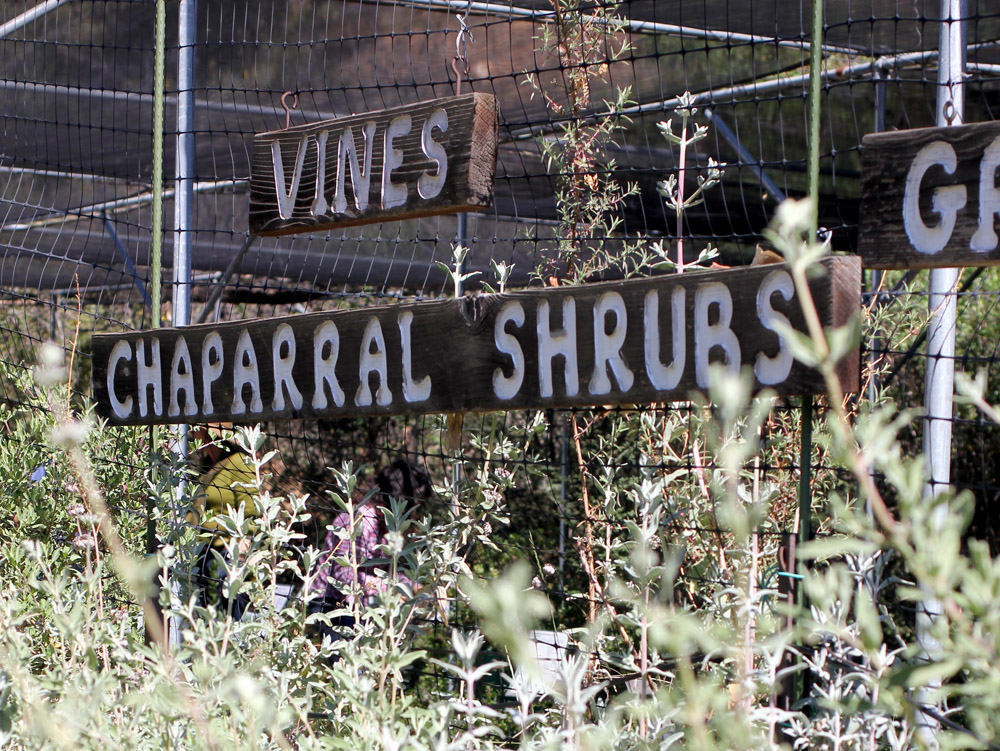
This Saturday, under a brilliant blue sky and warm sunshine, Greg, Eve and I attended a class titled “All About Leaves” at the Theodore Payne Foundation. This important organization is located on twenty two acres in the foothills of Sun Valley. Our teacher Lisa Novack took us on a multidimensional journey. We closely observed the leaves of eight different native plants within the Chaparral, Coastal Sage Scrub, Riparian and Woodland Habitats of the Los Angeles Basin. We learned the various adaptations of California native plant leaves and conducted three scientific experiments.

Native plants in California are mostly found in the park lands. Unfortunately Los Angelenos have created water hungry gardens throughout the city utilizing nonnative plants. This ignorance has created a host of challenges, most obvious the huge amounts of H20 needed from the Colorado River Delta to water thirsty lawns. The current ideal garden in the minds of City of Angel inhabitants is one appropriate for rain rich climates like England. One can hardly blame them since plant nurseries rarely stock many natives. The palm tree, now the emblematic symbol for Los Angeles isn’t even a native tree! We now have the regular removal of native Oak trees for construction of Mediterranean mini mansions that landscape using palm trees instead of our large canopy and rich leaf laden Coastal Live Oaks. Worse of all the LA Department of Building and Safety and the Urban Forestry Division ignore our protected tree ordinance. Can you tell I am angry?

The good news is that there is some awareness beginning to take place. As water prices rise, homeowners will look for other options. California Native Plant gardens are quite beautiful, require little to no water once established and are essential to our local, community ecosystem. Did you know that only 7% of our native insects can eat nonnative plants? Insects are a crucial part of the cycle of life, providing the most important food source for our bird population.

I am currently enrolled in a California Native Plant Design Class at the Theodore Payne Foundation. The intention for our garden is that it will inspire others to Go Native!

Theodore Payne Foundation
California Native Plant Society
California Oak Foundation
The California Chaparral Institute


The images are all old engravings which I placed on pieces of parchment in Photoshop.

Thursday, December 13, 2007

California Native Plants


I've finally gotten into the Native Plant Design class at the Theodore Payne Foundation. YAY! This class fills up before it even gets posted on their website, I've been on the wait list for quite sometime. Can't wait. The class begins Saturday, February 2nd at 10am. Thus, know that there will be lots of posts regarding our lovely California native plants.

Theodore Payne Foundation
California Native Plant Society
The California Chaparral Institute
The Santa Barbara Botanic Garden
California Gardens plant list

The photos were taken at the Santa Barbara Botanic Garden ©Roxana Villa

Wednesday, October 10, 2007

The Garden, part 2

Last Friday was the first day of the Native Pant Sale at the Theodore Payne Foundation. We are re-doing our landscape to incorporate as many indigenous plants as possible. Early last Friday my mom and I trekked out to Sun Valley to purchase natives. I arrived back in the Santa Monica Mountains with a treasure trove of new friends to plant into our clay soil.
The first weekend sale is for members only. I purchased quite a few Ceanothus, which will cover the majority of the front slope, intermingled with Yarrow, Manzanita and Sage and Island Alum under the Oaks. We will need to return again for more plants. Planning the garden has been like formulating a painting or perfume. All the elements of design must be employed; texture, repetition, contrast, scale and a unifying theme.
The Ceanothus consists mostly of 'Yankee Point' with a few 'Heart's Desire' and 'Centennial'. Eventually we will also plant more Oaks as well. I plan to experiment with all of these for the tinctures in my Californica series of perfumes. Some are already in Vera and Chaparral. The new perfume to this series, Rosa and Sierra, also contain local native tinctures. Rosa and Sierra will be available soon. Thank You to all of you who have sampled them and are patiently waiting for the quarter ounce liquid perfume. Californica samplers will be available as well.
The Native Plant Sale at the Foundation opens to non-members this Friday. I suggest getting there early with a list and plenty of time. Plastic for the interior of your car, gardening gloves, full water bottle and a notepad are also a great addition for the trek. If you need help, seek out Louise, she is very knowledgeable and friendly. While you are there sign up to be a member. Membership helps support this important non-profit. Members get a discount on plants and classes, as well as receiving the Poppy newsletter filled with native plant garden tips.
Why go native?
1) Aesthetic Value: A native garden is stunning and fits the authentic beauty of California.
2) Once established native plants require very little water!
3) Genetics, these native plants only exist in California, the genetic material thrives here. Why create a garden with plants indigenous to the east coast of Europe when we have a plethora of 6000 species of plants. Natives are considered "Pre-European", they evolved without human impact. By continuing to plant natives we avoid genetic contamination and cross pollinating.
A paradigm shift is required when we first begin to look at natives. The color and texture palette is quite different. Similar to the adjustment when we shift from synthetic to botanical perfume. We make a choice that positively impacts our health and the wellbeing of the land.

A really beauty filled native garden to visit is the one at the Santa Barbara Botanic Garden located in the foothills, up Mission Canyon Road. Not to be missed is the Redwood Forest residing next to the
dam. SBBG offer several docent guided tours which I highly recommend.

When you become a member of the Theodore Payne Foundation you will be given a fantastic book, conveniently in both English and Spanish. Another fantastic book is California Native Plants for the Garden.
The Theodore Payne Foundation
The Santa Barbara Botanic Garden

This photo was taken in 2005 at the SBBG. The structure in the background was created by Patrick Dougherty.
Patrick Dougherty Installation