Showing posts with label Herbs. Show all posts

Wednesday, September 7, 2016

Word Rant Wednesday


Wow, it's been since last January when I last hopped onto my bloody soap box and preached about correct word usage and definitions in the perfume industry. Thus, before another year arrives without me raging against the dying light, let's get on with it!

A few months ago a friend sent me a link to a blog post that referred to an iconic herbalist having challenges with essential oils. I won't mention the name since its not important. After some exploration I learned that some herbalists believe that we don't need essential oils. From what I was able to discern, this particular point of view argues that since a large quantity of plant material is needed to obtain an essential oil, the end product is very concentrated and thus both wasteful and potentially dangerous.

Different perspectives is a good thing and important, after all, there is no "one size fits all" and variety is what makes life interesting. There are many facets to a diamond, the more facets the more light is reflected.

In fact, after doing my own distillations I can resonate a bit with the "idea" that perhaps the plant material might be better utilized in its whole form and that the amount of water needed might be wasteful. This is particularly poignant here in Southern California where we have a sever drought. However, it really depends on what the plant material is, who is distilling and why, what the end result will be for the item, etc. I personally adore the hydrosols that have been obtained from the plant material from my garden, the farmers market and my other nearby growers. The benefits of the hydrosols have been marvelous and the aromatic waters contain chemicals that are not accessible in the raw plant material, as a tincture, infusion of an essentials oil. Each form will have a different imprint, a specific frequency based on the extraction, and each medium has a different use. For example, I might eat fresh spearmint leaves, use then in a tea, combine them with limes for a refreshing lime-aide on a hot day, or perhaps through them into a soup with fresh english peas. In fact, I have done all of those things in the last thirty days. However, that does not detract from the value of spritzing my face with the hydrosol while typing this blog post, using the essential oil on my temples or inhaling the aromatic molecules from my palms to provide a bit of clarity and energize my thinking or adding a tiny bit of the essential oil into an aromatherapy blend or perfume.

Just like we have many types of aromatics in the palette of perfume, we also have many types of extractions and ways to use them. Throughout history the "Still Room", the distillery room, was a big part of daily life containing herbs from the nearby garden.

"Still Rooms were places where freshly collected plants and flowers were utilised in many ways, and these traditions continued well into the Edwardian period. Herbs could be hung upside down in bunches and dried for household and kitchen use, or pounded to a paste and in their simplest form added to lotions and grease or fats to provide ointments, medicines and poultices, or added to water and allowed to quietly “distill” for bottling as herb-rich medicinal waters. These were strained off into bottles and stoppered with a cork or the fore-runner of today’s “clingfilm” – pig or sheep bladders, stretched tightly to produce an air-tight seal.

Honey-rich syrups were made by infusing herbs previously bruised in a mortar and pestle or by making a strong decoction – both methods requiring heating to reduce the liquid, then strained through muslin and honey added to sweeten. Colds and sore throats were often relieved by a rose-hip and lemon balm decoction with honey added to soothe and heal. In a static display it is difficult to show the process without a fire and bubbling potions reducing away, but we have an old copper full of herbs waiting to be infused with a ladle nearby for bottling – and a couple of completed bottles ready for use."1

According to one herbalist, the case against essential oils is that they are too concentrated and thus cause hormone disruption. This is followed by a reference to lavender oil causing young boys grow breasts. Oh my, really? Please follow this link to a post here at the journal from 2008 where I share insights into this very topic.


Ultimately we each will have to find our own truth, independent from what anyone says, that is the main tenet to the Art of Botanical Perfume course.

“If you meet the Buddha, kill him.”
~ Linji

1 From the The Rye Castle Museum blog post The StillRoom in the Tower

Tuesday, June 28, 2016

Spiritus


I am excited to share that a beautiful, cooper alembic has been sent to me. I have chosen to name the still "Spiritus", since the word was one of the names given to the first distillates which were made with wine, herbs and citrus.

Now that the course is finished I have been getting my ducks in a row to dive into this very ancient and alchemical art.

Auspiciously, my local friend Monika Peters began her own journey in distillation last Autumn, thus I have a "distillation" buddy! On Friday Monika and I decided to distill, thus Sunday I headed out to her home high up in the Santa Monica Mountains overlooking the Pacific ocean to do some with my still. We had planned to do a distillation and also "prepare"my still that day. Unfortunately Monikas hoses were too small for my still, so that task is set for another day...perhaps this week.


For the distillation I had Greg purchase some fresh picked, organic lavender from Fillmore at the Farmers Market on Saturday, which came with a few sprigs of mint and lemon verbena. During twilight I went out into my garden hunting for something to pair the lavender with, I was considering white sage, when the Artemesia californica caught my attention with her new shoots gently waving at me. I asked, "Oh, would you like to offer your new shoots to be converted to spirit?" I felt that the plant indeed wanted to be part of the endeavor. Thus, very early on Sunday morning, amidst the gentle song of the birds I harvested a bundle of the artemesia and gave the plant a small carnelian crystal in return for the new shoots. One thing that I find interesting about this particular plant on my front slope is that it came up on its own, most likely thanks to a bird or coyote droppings.

I then put the lavender bundles and artemesia into a bucket of filtered water while I loaded Spiritus into the car and all my other gear for the day. As I placed the bucket with the plant material into the car I decided to add a quartz crystal in with the plants to help maintain their vitality.

After determining that we would not be using my still we set up Monikas, which she named Grace. We then decided to gather some rosemary from her garden to pair with the lavender and artemesia. Thus we had a trinity of local plants from the Lamiaceae family.


We assembled all the apparatus and then weighed our plant material. Next we covered the plants with water, keeping track of how much water we used. Meanwhile Monika noted all these details and more on a paper in her notebook, including other items like the date, time, location, temperature of the day, if there was wind, etc. It was a perfect day, sunny, 79 degrees with light wind.


Next, at 1:58pm we fired up the stove! Although we could smell the beautiful aromatics as everything began to heat up it was at approximately 2:10pm we saw the first drip of our hydrosol. An incredibly exciting moment!


During the process we tested the ph and noted the aroma and taste of the water. At 3:11 we decided to turn off the heat and end the process, although later on we realized we could have let it go a bit longer.


Hydrosols, also referred to as floral or herbal waters, were originally called "hydro-lats" lat meaning milk, because of the whitish color of the water as it comes out of the still. The yellow colored liquid floating on top of the water is the essential oil.

The process gave us 16 ounces of a beautiful fragrant water with notes of pinene, camphor, lavender and lemon. Once the herbal water sets for a bit and we separate out the essential oil I will go on a little tasting/smelling journey with the hydrosol and see what she shares with me. Meanwhile, the quartz crystal that I added to the herbs ended up going into the distillation with the plants and seems to have disappeared.


All photos Roxana Villa.

Friday, August 24, 2012

Woodsii


While prowling social media this morning I came across an interview on the Mountain Rose blog with herbalist Kiva Rose. The last question in the interview is "Is there one herb that you feel especially connected to, and if so, in what way?" Kiva choose the Wild Rose, Rosa woodsii, which is a sister to the woodland rose Rosa californica. I've seen Rosa woodsii at the Theodore Payne Foundation, it looks almost identical to Rosa californica.

Thus my SOTD, scent of the day, will be Rosa


Here is how Kiva answered the question, which is true for Rosa californica....

"While there are a number plants I feel closely allied to as medicine, the closest is our native Wild Rose,  Rosa woodsii. It’s a native plant common to much of the American West, and I love its rambling, brambly ways just as much as I adore its sweet scent, sour hips, and incredible medicine. Perhaps because of its beauty, the Rose’s healing properties are popular yet often underrated in modern herbalism, but I find it to be a profound nervine, anti-inflammatory, anti-infective, and tissue healer, in addition to its other traits. I certainly wouldn’t want to be without it! I also value the Rose for its thorns, the lessons of boundaries and self-protection inherent in such wickedly curved weapons. The Wild Rose is generous but with clear boundaries, abundant but wild, sweet but multi-faceted. I am forever finding new lessons to be learned from this plant and feel connected to it through both shared traits as well as the ways in which we’ve worked together to provide healing in so many people."

Friday, July 27, 2012

Perfume Illuminated: Herbes de Provence


When I was a child my mother worked for a boutique in Beverly Hills. On occasion she would travel to Paris for some of her clients, if I was really lucky I went with her, if not she would always bring back wonderful treats. The treats ranged from perfume, cheese, maron glace and cooking herbs.

The cooking herbs were usually Bouquet Garni, which translates as "garnish bouquet" in French. The mix usually contains parsley, thyme and bay leaf. Depending on the region and different makers there may also be basil, burnet, chervil, rosemary, peppercorns, savory and tarragon in the blend.
My favorite herb mix from France is Herbes de Provence which is generally a combination of the following herbs: savory, fennel, basil, thyme, sage, marjoram, oregano and lavender blossoms. When I make it here at home I use: thyme, rosemary, sage, lavender and oregano. I sprinkle it on a chicken for roasting along with fresh garlic and butter. The blend works well for a variety of dishes including grilled vegetables and stews.


FRAGRANCE

The herbs used to make an Herbes de Provence culinary blend are also distilled as essential oils used in aromatherapy and natural perfume. I associate these mostly with aromatherapy because that was my gateway into the healing world of plant medicine. 


Lavender

There's a few things I've learned in life:
always throw salt over your left shoulder,
keep rosemary by your garden gate, plant lavender for good luck,
and fall in love whenever you can.
~ Alice Hoffman (Practical Magic )

The word lavender comes from the Latin "Lavare" meaning to wash. The herb has a very rich presence in literature and is used widely in medicinal preparations, culinary delights and cosmetic preparations. The essential oil of lavender is derived from the distillation of the flowering tops of Lavandula officinalis, also referred to as Lavandula angustifolia/vera.

The aroma of lavender essential oil is considered herbaceous, fruity and sweet depending on the variety and type of extraction. In many circles it is deemed "floral", which may or may not be present...again depends on the variety. More appropriate terminology could be an herbaceous floral character. For use in aromatherapy synergies it is considered the universal oil and used extensively in almost all types of dis-ease. Its chemistry is rich in the ester: linalyl acetate the alcohol: linalol and sesquiterpenes.

In perfume lavender essential oil tends to be classified as a top to middle note. Where as the absolute is considered a base note. In perfume we find the lavender note used in Lavender Eau de Colognes and the category of fragrance deemed Fougere, meaning fern in French. Fougere perfumes feature the combination of oakmoss with lavender.

As a botanical and natural perfumer I use Lavender as a bridge note. It is not an essence I use regularly, unless it is for a specific perfume like Vera or a custom perfume. In aromatherapy synergies and blends I use it in almost every single preparation.

Note: This information on Lavender has been gathered from another post here at the journal, if you would like to read more here is the link to satisfy your craving. 


Sage, here is the link to the Perfume Illuminated post on Sage.

Thyme
There are many different varieties of thyme used in aromatherapy and natural perfume. One of my all time favorites is Thyme geraniol, which has a geranium note. In aromatherapy we use thyme mostly in blends for One of my very first aromatherapy blends when I took the live hours class with Jade Shutes was a blend I made for Will Power. It included: Thyme, Elemi and Juniper. 


Basil
Known as Ocimum basilicum, this hardy and very popular herb is ruled by Mars. The annual produces fragrant leaves and flowers. There are many varieties of Basil essential oil and depending where it is grown will determine differing chemical constituents. Thus, you may have a Basil that is high in linalol or one that has more camphor or methyl chavicol or a combination. The aromatic profile tend to be sweet, herbaceous, spicy and fresh. In aromatherapy it works on several systems of the body, I tend to use it in headache blends as it is a great analgesic, stimulating and clearing to the mind.

Fennel
The fennel we use in aromatherapy is Foeniculum vulgare P. Mill var. dulce which also goes by the names Fenkel, Wild Fennel and Sweet Fennel.It was the Romans who gave fennel its name Foeniculum from the Latin word Foeniculum meaning hay.1 Fennel essential oil is distilled from the seeds and is most commonly used in blends for digestion, circulation and the endocrine system. One of the keywords associated with this oil is balance.


A few nights ago as I was drooling over pictures of the french country side on Pinterest my daughter asked if we had any Herbes de Provence. The synergy of the question with the visual imagery made me begin contemplating an Herbes de Provence perfume, which in turn inspired today's Perfume Illuminated contribution.

Thus, my perfume will focus mainly on lavender, thyme, sage with a bit of fennel, basil, oregano and savory. These are all middle notes. For the base I'm thinking woods, cistus, beeswax absolute and olive fruit or leaf. I'm thinking citrus for the top notes, probably citron. We will see where the journey takes us! I definitely don't want to repeat Vera (thus no oakmoss or very little) and I don't want to make something that is overly medicinal, although odd and different is okay. Let me know if there are any notes you suggest by leaving a comment here and I will send a sample off the first edition when I'm done if I choose a specific essence you have mentioned that is different from what I have already listed.

From the Silver Palette CookBook: "If fresh herbs are plentiful, use them in bouquets around the house; their dark green or gray leaves are beautiful with flowers. Make an edible centerpiece of such herbs as basil, dill and mint: wash fresh herbs, shake dry, and arrange with salad greens in a bowl of crushed ice."


FLAVOR: Beth Schreibman Gehring
Please continue reading about Herbes de Provence at the Windesphere Witch blog


1 Jade Shutes, Aromatherapy for Bodyworkers, Pearson/Prentice Hall, New Jersey, Chapter Thirteen, p.297
Top image found via Pinterest with no reference to the creator, other images by or digitally enhanced by Roxana Villa

Monday, January 10, 2011

Nightingale


Eve has been cleansing for just over a week now, thus the inactivity her at the illuminated journal. First she had a fever which turned into a cough which progressed into a sore throat. The fever disppeared but the throat infection raged on accompanied first with an ear infection on one side followed by the other side with pink eye manifesting in one eye and then the other.

Kidding! Talk about going through a gauntlet for both mommy and daughter. She is just about out of it now and I am happy to report the healing has transpired with no visits to the doctor or any big pharma drugs. The medicines were all plant and mineral based and some of them smelled and tasted really nice.

The regimen included herbal teas, baths, steam inhalations, garlic oil ear drops, lavender hydrosol compresses for the eyes and ear,neck and foot massages with aromatherapy blends. Garlic and onion has been our friends in soups along with ginger and lemon in tea.

My training in aromatherapy as well as classes I've taken in herbalism and anthropological medicine really come in handy during these incidents. Last time Eve had this intense of an illness was when she was three. We survived without any synthetic antibiotics then and did it this time once again.

Before Florence Nightingale set up a standard for nursing and the care of illness stems way back to midwife and what some called witches. Regrettably much of this wisdom was lost during the burning times as men and western medicine took over.

For more information on home remedies check out this post here at the journal titled Good food = Good medicine.

I've got lots to share with you all, more in the morrow peeps.

Friday, September 24, 2010

Perfume Illuminated: Absinthe

“Let me be mad… mad with the madness of Absinthe, the wildest, most luxurious madness in the world.” ~ Marie Corelli
It seemed fitting that as we just celebrated the Autumn Equinox and Harvest Moon that Absinthe should be the one illuminated this day. Known also as the Green Fairy, Absinthe is a flavored alcoholic spirit from Europe. Originating in Neuchâtel, Switzerland the first Absinthe drink was an herbal elixir made of wormwood leaves macerated (tinctured) in wine. The healing potion was similar to "bitters" and said to help with a variety of dis-ease including stomach discomforts, rheumatism and jaundice. My first experience encountering the Green Fairy was in 2003 during a twenty day painting seminar in Austria. Each evening after dinner the artists in the workshop would gather to discuss art, spirituality, politics, etc and eventually head down to the steam room, in the spa. It was through the steam that I noticed a vivid green luminosity coming from one of my fellow artists glasses. He and a few others had glasses of the spirit with them. They told how they would sneak back the beverage to the US camouflaged in mouth wash bottles. This was before all the silliness with no liquids in luggage.
"I sit at my door, smoking a cigarette and sipping my absinthe, and I enjoy every day without a care in the world." ~ Paul Gauguin
Absinthe was made wildly popular by the Parisian artistic sector of the 19th and 20th centuries. During this time period rumors spread that the drink contained dangerous psychoactive properties due to the high content of thujone contained in wormwood. This reminds me of some current urban legends about africanized bees or toxic natural perfume ingredients
FRAGRANCE
Absinthe contains a "holy trinity" of herbs: Green anise Pimpinella anisum, Wormwood Artemisia absinthium and Florence Fennel Foeniculum vulgare. Wormwood Artemisia absinthium, a native of Europe and Asia, is the most popular ingredient in the trio and what the drink is named after. Wormwood is a perennial herb ruled by Mars with silvery feather leaves, woody stalks and olive green flowers. As an essential oil wormwood is not recommended in aromatherapy due to the high thujone content. It is considered a neurotoxin and as with the herb not recommended for prolonged use. If you decide to use the essential oil use extreme mindfulness and minimal amounts. Consider substituting on of the other plants in the Artemisia genus, which are not as toxic and please make sure not to take this essence internally! The predominant ingredient in Absinthe is Anise Pimpinella anisum. Other key components include: licorice, hyssop, fennel, angelica root, melissa, coriander, and nutmeg. Ingredients tend to vary depending on herbs grown in the region where the Absinthe is made. Almost all of these herbs exist as essential oils. To make your own Absinthe perfume find a pleasant ration between them and add to alcohol. After returning from the trip to Austria I created an Absinthe perfume and am excited to now resurrect her. I pulled out all my notes and formulas. In reading over my notes the mind has devised even more ideas. First I will take a whiff of the original I made back in 2003 and decide what shall stay, what shall go, etc. It would be easy to fall into a remake of Vera or GreenWitch, both of those having herbaceaous and green notes. For Absinthe I'm thinking of a slightly different direction though...we shall see, or actually smell, what transpires.
"I will free you first from burning thirst That is born of a night of the bowl, Like a sun 'twill rise through the inky skies That so heavily hang o'er your souls. At the first cool sip on your fevered lip You determine to live through the day, Life's again worth while as with a dawining smile You imbibe your absinthe frapp&eacute. " ~ Glenn MacDonough
FLAVOR: Beth Schreibman Gehring
Please continue reading about Absinthe at the Windesphere Witch blog
Opening two images: 1. The Absinthe Fairy by Aly Fell 2. Absinthe Robette by Privat-Livemount Content and other images ©Roxana Villa.

Friday, July 2, 2010

Perfume Illuminated: Cilantro


It's that time of year where Summer festivities are at a peek with fresh foods from the garden, picnics, and fun in the sun. For this celebration of bounty today we illuminate the flavor and fragrance of Cilantro.


Cilantro, often termed Chinese parsley, is the green leaves of the Coriander plant Coriandrum sativum. The term cilantro is used when speaking of the fresh herb where as the dried seeds are referred to as Coriander. Nothing like a little botanical confusion.

Most often you will find the fresh herbs used for fresh south of the border flavorings for Mexican and Asian food where as the dried version is used in European and Middle Eastern dishes.


FRAGRANCE

The essential oil of Cilantro is very much like the herb: green, fresh and enlivening. To obtain the essence the raw plant matter is steam distilled The note classification falls between a top and a middle. I suggest putting it on a scent strip and determining the classification for yourself. In natural and botanical perfumery you will notice that the same fresh quality the herb imparts on food also transpires in perfume. The dominant fragrance family for Cilantro essential oil is herbaceous and has the ability to wander into the green and spice territories as well.

Coriander essential oil is much more common than Cilantro. This is due to the fact that the later is mainly composed of the organic chemical decylaldehyde which is very cheap as a synthetic aroma chem.

I used Cilantro essential oil in the new version of Page47. I discovered that this note has the ability to amp up citrus and works particularly well with Bergamot. Thus for our project today I'd like to suggest an adaption of a traditional cologne using Cilantro as the herbal component.

CILANTRO EDC (Eau de Cologne)

Ingredients:
Essential oil Synergy (see below)
- 7 drops distilled water or hydrosol
- 90 mls Alcohol: Use perfumers alcohol. Vodka, rum,
or brandy can be used if perfumers alcohol is not an option.

Essential Oil Synergy
25 drops Bergamot essential oil
15 drops Lime essential oil
4 drops Neroli essential oil
5 drops Cilantro essential oil
3 drops Clary Sage essential oil
1 drop Cistus essential oil

1. Combine essential oils together into a glass bottle with a tight fitting lid. Allow to meld or move on to to step two.
2. Add essential oils to your alcohol, allow to meld or move on to to step three.
3. Add water drop by drop to the blend and allow to set in a cool, dark space with lid tightly secured for at least a few days, a month to a week is best.
4. Decant or filter into a colored glass atomizer.
5. Spritz as needed.

Look for my version on at the E-shop soon.


FLAVOR

About a month ago I came across a package of Red Quinoa at Trader Joes and choose to give it a try, already being a long time fan of the regular variety. When I went to prepare it I decided to follow recipe on the box for a fresh Mexican salad using the protein rich grain, black beans, corn, cilantro and lime. Since that day I have been addicted to using fresh cilantro in almost everything. My favorite is combining it with lime for salad dressing.

Images:
"Delish" Strawberry photo by of Mindy Strauss
Cilantro photo from FrogPondGardens
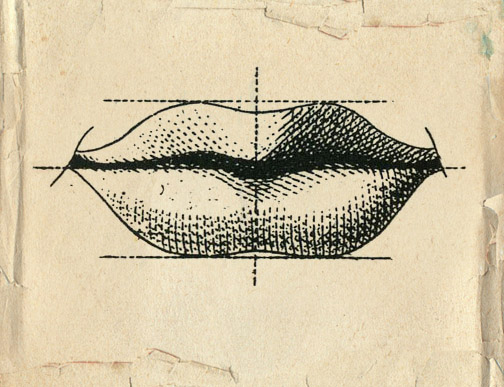
Mouth, Nose and Cologne engravings have been digitally enhanced by Roxana Villa

Thursday, June 10, 2010

Aromatic Garland


Herbal and floral garlands, also referred to as "swags", are a variation on the wreath theme. Spring and summer bring us a plethora of plant materials to make bringing a bit of nature into the home a breeze.

My monthly contribution to the Lillyella blog is super simple do it yourself "Herbal Garland" project that you can make with local flora, your garden or farmers market finds. Next time I am going to make a long one for one of our living room windows, bulking up the plant material like this photo above featured on Fragrantica. Using clothes pins is a fun idea, especially since you can get some great vintage or cute little tiny ones.

Friday, March 5, 2010

Perfume Illuminated: Cannabis


In a subtle association with the previous post about Alice's Adventure in Wonderland, Perfume today gets Illuminated with a bit of Cannabis.

Known by a variety of names including Hemp, Cannabis was utilized for thousands years for such things as paper, fiber, textiles, beauty care and more. An interesting time line of the use of Hemp can be found at Hemp House Maui where the versatility of the plant is well documented.


FRAGRANCE

For the natural botanical perfumer there is a steam distilled Hemp, Cannabis sativa, essential oil and a Hemp seed oil as a carrier base.

Hemp seed carrier oil has a medium viscosity with a nutty aroma. It is often employed for the skin, cooking and soap making. The disadvantage of the oil is that the shelf life is only about three months depending on how it is stored. My experience with it has been with deep moisturizing oil treatments for the hair.

The essential oil of Hemp is obtained by the flowers with an herbaceous aroma. I use this essences in Vera, the perfume devoted to Lavender. It pairs well with other aromatics of the meadow and citrus.

This particular essence is not included in any of my perfume books. Since the aroma therapeutic profile has a calming affect the essential oil will work well for a bedtime perfume or linen spray combined with Chamomile, Lavender, Sandalwood and Neroli.

For a conceptual perfume consider pairing with Patchouli as the start of a hippie perfume and add some transformational essences including Frankincense.


FLAVOR: Beth Schreibman Gehring
Please continue reading about Cannabis at the Windesphere Witch blog

Thursday, November 19, 2009

Bee-ing there


Honey is the only food on the planet that will not spoil or rot. It will do what some call turning to sugar. In reality honey is always honey. However, when left in a cool dark place for a long time it will do what I rather call "crystallizing".   When this happens I loosen the lid, boil some water, and sit the honey container in the hot water, turn off the heat and let it liquefy. It is then as good as it ever was. Never boil honey or put it in a microwave. To do so will kill the enzymes in the honey.

Facts on Honey and Cinnamon:  It is found that a mixture of honey and Cinnamon cures most diseases. Honey is produced in most of the countries of the world. Scientists of today also accept honey as a 'Ram Ban' (very effective) medicine for all kinds of diseases.  Honey can be used without any side effects for any kind of diseases.

Today's science says that even though honey is sweet, if taken in the right dosage as a medicine, it does not harm diabetic patients.   Weekly World News, a magazine in Canada , in it's issue dated 17 January,1995 has given the following list of diseases that can be cured by honey and cinnamon as researched by western scientists:

HEART DISEASES:
Make a paste of honey and cinnamon powder, apply on bread, instead of jelly and jam, and eat it regularly for breakfast. It reduces the cholesterol in the arteries and saves the patient from heart attack.  Also, those who have already had an attack, if they do this process daily, they are kept miles away from the next attack.. Regular use of the above process relieves loss of breath and strengthens the heart beat.  In America and Canada , various nursing homes have treated patients successfully and have found that as you age, the arteries and veins lose their flexibility and get clogged; honey and cinnamon revitalize the arteries and veins.

ARTHRITIS:
Arthritis patients may take daily, morning and night, one cup of hot water with two spoons of honey and one small teaspoon of cinnamon powder. If taken regularly even chronic arthritis can be cured. In a recent research conducted at the Copenhagen University, it was found that when the doctors treated their patients with a mixture of one tablespoon Honey and half teaspoon Cinnamon powder before breakfast, they found that within a week, out of the 200 people so treated, practically 73 patients were totally relieved of pain, and within a month, mostly all the patients who could not walk or move around because of arthritis started walking without pain.

BLADDER INFECTIONS:
Take two tablespoons of cinnamon powder and one teaspoon of honey in a glass of lukewarm water and drink it. It destroys the germs in the bladder.

CHOLESTEROL:
Two tablespoons of honey and three teaspoons of Cinnamon Powder mixed in 16 ounces of tea water, given to a cholesterol patient, was found to reduce the level of cholesterol in the blood by 10 percent within two hours.   As mentioned for arthritic patients, if taken three times a day, any chronic cholesterol is cured. According to information received in the said Journal, pure honey taken with food daily relieves complaints of cholesterol.

COLDS:
Those suffering from common or severe colds should take one tablespoon lukewarm honey with 1/4 spoon cinnamon powder daily for three days. This process will cure most chronic cough, cold, and clear the sinuses.

UPSET STOMACH:
Honey taken with cinnamon powder cures stomach ache and also clears stomach ulcers from the root.

GAS:
According to the studies done in India and Japan, it is revealed that if Honey is taken with cinnamon powder the stomach is relieved of gas.

IMMUNE SYSTEM:
Daily use of honey and cinnamon powder strengthens the immune system and protects the body from bacterial and viral attacks. Scientists have found that honey has various vitamins and iron in large amounts. Constant use of Honey strengthens the white blood corpuscles to fight bacterial and viral diseases.

INDIGESTION:
Cinnamon powder sprinkled on two tablespoons of honey taken before food relieves acidity and digests the heaviest of meals.

INFLUENZA:
A scientist in Spain has proved that honey contains a natural ' Ingredient' which kills the influenza germs and saves the patient from flu.

LONGEVITY:
Tea made with honey and cinnamon powder, when taken regularly, arrests the ravages of old age. Take four spoons of honey, one spoon of cinnamon powder, and three cups of water and boil to make like tea. Drink 1/4 cup, three to four times a day. It keeps the skin fresh and soft and arrests old age. Life spans also increase and even a 100 year old, starts performing the chores of a 20-year-old..

PIMPLES:
Three tablespoons of honey and one teaspoon of cinnamon powder paste. Apply this paste on the pimples before sleeping and wash it next morning with warm water. If done daily for two weeks, it removes pimples from the root.

SKIN INFECTIONS:
Applying honey and cinnamon powder in equal parts on the affected parts cures eczema, ringworm and all types of skin infections.

WEIGHT LOSS:
Daily in the morning one half hour before breakfast on an empty stomach, and at night before sleeping, drink honey and cinnamon powder boiled in one cup of water. If taken regularly, it reduces the weight of even the most obese person. Also, drinking this mixture regularly does not allow the fat to accumulate in the body even though the person may eat a high calorie diet.

CANCER:
Recent research in Japan and Australia has revealed that advanced cancer of the stomach and bones have been cured successfully. Patients suffering from these kinds of cancer should daily take one tablespoon of honey with one teaspoon of cinnamon powder for one month three times a day.

FATIGUE:
Recent studies have shown that the sugar content of honey is more helpful rather than being detrimental to the strength of the body. Senior citizens, who take honey and cinnamon powder in equal parts, are more alert and flexible. Dr. Milton, who has done research, says that a half tablespoon of honey taken in a glass of water and sprinkled with cinnamon powder, taken daily after brushing and in the afternoon at about 3:00 P.M. when the vitality of the body starts to decrease, increases the vitality of the body within a week.

BAD BREATH:
People of South America, first thing in the morning, gargle with one teaspoon of honey and cinnamon powder mixed in hot water, so their breath stays fresh throughout the day.

HEARING LOSS:
Daily morning and night honey and cinnamon powder, taken in equal parts restores hearing. Remember when we were kids? We had toast with real butter and cinnamon sprinkled on it!


Source of this material is unknown, it was sent to me by my lovely friend Monica. Thank you Monica.
Here is a link that was twittered today on Unconventional Uses for Honey, make sure to ignore the first part where they talk about fearing the bee...NOT!

Images: Top is the mini solid of Page 47, bottom and just above is the purple bee art deco necklace with the Illuminated Perfume bee logo.