Showing posts sorted by relevance for query Sage. Sort by date Show all posts

Saturday, March 13, 2010

Perfume Illuminated: Sage


The hills are alive with the aroma of the chaparral here where I dwell and make art. Ceanothus, the Oaks, some of the Sages and the Poppies are all in bloom. This post will illuminate some of the notes and attributes of the species Salvia, which grows abundantly in the Santa Monica Mountains.


In the California garden we have been fostering a variety of native salvias dot our landscape including:
  • White Sage, Salvia apiana
  • Black Sage, Salvia Mellifera
  • Cleveland Sage, Salvia clevelandii
  • Salvia leucophylla
  • Dwarf Black Sage, Salvia tera seca
  • Hummingbird Sage, Salvia spathacea

FRAGRANCE

The genus Salvia has a very large variety in the species, the most familiar is common sage, Salvia officinalis, often utilized in the kitchen. The word officinalis comes from the Linneas binominal system of naming plants, this particular grouping has medicinal attributes. The word Salvia comes from the latin Salveo meaning to heal or Salvere meaning to cure, both referring to the curative powers of the plant.

In aromatherapy and natural, botanical perfume we have quite a treasure trove of Salvias to work with, each with their own specific aroma and therapeutic blueprint. Salvia officinalis, originating in the Mediterranean, has a warm herbaceous scent with camphorous notes. It is the camphorous notes which make this distilled gem wonderful for the respiratory system. The essence also contains thujone in it's chemical make-up, which has been found to cause seizures in those susceptible as well as irritate the skin. Although I personally have had no reactions, please be mindful when using this essential oil. Other varieties of sage available for aromatic potions are Greek, Spanish and Dalmation sage some available as essential oils, some as Co2 extracts and some in both formats.


The other essential oil commonly used in aromatherapy is Clary sage, Salvia sclarea, distilled from the flowering tops and leaves. Historically this salvia was used to flavor wine and create a digestif. The aroma is much sweeter than its officinalis family member retaining an herbaceous character with a rich wine-like quality. For the botanical perfumer Clary sage is also available as a concrete and an absolute. All of these work well in the creation of a faux Ambergris accord/chord. In aromatherapy I have used Clary sage in blends for balancing hormones and emotions.


Since the leaves of sage are so aromatic and release their aroma and medicinal qualities with ease sage makes a fantastic tincture and infused oil. I use the native Sage apiana, pictured at left, for a tincture in the botanical perfume Vera, the infused oil will be highlighted in the upcoming solid version. This sage is an evergreen perennial sun loving shrub which is sacred to the native people of California and used in ceremony. Here is an excerpt from a book by Chumash woman I had the pleasure to meet at Topanga Days:

The healer, or an elder from the village, put a small branch of dried white sage in a suitable container such as a seashell, typically an abalone shell. The white sage was ignited with fire. The flames were blown out allowing the white sage to smolder and smoke. The smoke from white sage has a pleasant smell and is thought to help carry prayers to God. The healer prayed for the health of the patient while moving the seashell to allow the smoke to touch every part of the patient's body including the soles of the feet. The healer sometimes touched the patient's back with an eagle or hawk wing to draw out harmful spirits (nunasus). The wing was then flicked down to send the harmful spirits back into the underworld where they originated. Smudging with white sage is still practiced by Chumash people today.*

One of the classic culinary herb mixes is Herbes de Provence which includes sage. Here is a traditional blend for cooking which can easily be translated into an herbaceous cologne or perfume. For a perfume I suggest adding some wood in the base and citrus in the top notes. The recipe can be enhanced with tinctures of sage, lavender, bay etc. Consider taking this idea one step further and creating an aromatic that is based on the local native plants in your area. The Herbes de Provence formula comes from the native flora the grows in southern France.

Sage
Thyme
Chervil
Rosemary
Savory
Lavender
Tarragon
Marjoram
Oregano (has a strong aroma, use minimal amounts)
Mint (has a strong aroma, use minimal amounts)
Fennel
Bay leaves

FLAVOR: Beth Schreibman Gehring
Please continue reading about Sage at the Windesphere Witch blog

* Spirit, Mind and Body in Chumash Healing, James D. Adams, Jr and Cecelia Garci, Oxford Journals

Resources and reference:
California Gardens
Las Pilitas Nursery
Theodore Payne Foundation
A Modern Herbal by Mrs. Grieve
The Hortus Medicus
The Epicenter


Images
Photographs and old engravings cleaned and placed on parchment by Roxana Villa

Sunday, May 15, 2011

Heaven and Earth

Salvia apiana, Sacred White sage

It's a glorious day in the woodland, the native sages in the garden are the top bloomers at the moment. All the rain in the autumn and winter helped them to get well established. I'm in awe at how big some of the plants have gotten and inspired to plant many more. Autumn is the ideal time to plant California natives because after flowering in the Spring they move into their "dormant" sleep cycle. This is opposite from all the typical non native plants sold at the nurseries.

Quercus agrifolia

The three of us were in the kitchen when I looked out the window and noticed two red tail hawks circling in the cerulean sky. The amazing color deep blue shade of the celestial heavens beckoned me outside as I remembered to take a look at the Matilija Poppies. The large papier-mache flowers of these native poppies look a bit like fried eggs, they are quite spectacular. This will be the first time they bloom since I planted them about two years ago. I am so excited I can barely stand it.

Matilija Poppy, Romneya coulteri

The garden is now starting to look like an authentic, native, sagebrush yard. Every time I go out there I am filled with joy. The aroma is woody and sagey and the most prominent sound is the hum of the honey bees along with birdsong.

Salvia clevelandii, Musk Sage or Salvia leucophylla Purple Sage (?)

Artemesia californica

Some of the early blooming natives, like the Ceanothus are starting to shift from flowering to the berry/seed phase. The flowers provide nectar and pollen while the seeds are food for the birds.

Salvia mellifera, Black Sage, Salvia clevelandii, Musk Sage or Salvia leucophylla Purple Sage (?)

I have planted so many different sages in the garden that I can't quite tell from these photos which is which. If you take a stroll in the garden with me I can tell you which one it is. The Salvia clevelandii has an amazing musky odor. I love the smell of all of them but that clevelandii is really interesting. After I've been meandering amongst the plants I waft the most beautiful natural sage perfume, which lasts through out the day. The honey bee botanical perfume I've been working on has a thread of sage in it sticthed with wood and honey notes.

As soon as the Matilija poppies bloom I'll be back with more photos, perhaps as early as tomorrow!

Friday, July 27, 2012

Perfume Illuminated: Herbes de Provence


When I was a child my mother worked for a boutique in Beverly Hills. On occasion she would travel to Paris for some of her clients, if I was really lucky I went with her, if not she would always bring back wonderful treats. The treats ranged from perfume, cheese, maron glace and cooking herbs.

The cooking herbs were usually Bouquet Garni, which translates as "garnish bouquet" in French. The mix usually contains parsley, thyme and bay leaf. Depending on the region and different makers there may also be basil, burnet, chervil, rosemary, peppercorns, savory and tarragon in the blend.
My favorite herb mix from France is Herbes de Provence which is generally a combination of the following herbs: savory, fennel, basil, thyme, sage, marjoram, oregano and lavender blossoms. When I make it here at home I use: thyme, rosemary, sage, lavender and oregano. I sprinkle it on a chicken for roasting along with fresh garlic and butter. The blend works well for a variety of dishes including grilled vegetables and stews.


FRAGRANCE

The herbs used to make an Herbes de Provence culinary blend are also distilled as essential oils used in aromatherapy and natural perfume. I associate these mostly with aromatherapy because that was my gateway into the healing world of plant medicine. 


Lavender

There's a few things I've learned in life:
always throw salt over your left shoulder,
keep rosemary by your garden gate, plant lavender for good luck,
and fall in love whenever you can.
~ Alice Hoffman (Practical Magic )

The word lavender comes from the Latin "Lavare" meaning to wash. The herb has a very rich presence in literature and is used widely in medicinal preparations, culinary delights and cosmetic preparations. The essential oil of lavender is derived from the distillation of the flowering tops of Lavandula officinalis, also referred to as Lavandula angustifolia/vera.

The aroma of lavender essential oil is considered herbaceous, fruity and sweet depending on the variety and type of extraction. In many circles it is deemed "floral", which may or may not be present...again depends on the variety. More appropriate terminology could be an herbaceous floral character. For use in aromatherapy synergies it is considered the universal oil and used extensively in almost all types of dis-ease. Its chemistry is rich in the ester: linalyl acetate the alcohol: linalol and sesquiterpenes.

In perfume lavender essential oil tends to be classified as a top to middle note. Where as the absolute is considered a base note. In perfume we find the lavender note used in Lavender Eau de Colognes and the category of fragrance deemed Fougere, meaning fern in French. Fougere perfumes feature the combination of oakmoss with lavender.

As a botanical and natural perfumer I use Lavender as a bridge note. It is not an essence I use regularly, unless it is for a specific perfume like Vera or a custom perfume. In aromatherapy synergies and blends I use it in almost every single preparation.

Note: This information on Lavender has been gathered from another post here at the journal, if you would like to read more here is the link to satisfy your craving. 


Sage, here is the link to the Perfume Illuminated post on Sage.

Thyme
There are many different varieties of thyme used in aromatherapy and natural perfume. One of my all time favorites is Thyme geraniol, which has a geranium note. In aromatherapy we use thyme mostly in blends for One of my very first aromatherapy blends when I took the live hours class with Jade Shutes was a blend I made for Will Power. It included: Thyme, Elemi and Juniper. 


Basil
Known as Ocimum basilicum, this hardy and very popular herb is ruled by Mars. The annual produces fragrant leaves and flowers. There are many varieties of Basil essential oil and depending where it is grown will determine differing chemical constituents. Thus, you may have a Basil that is high in linalol or one that has more camphor or methyl chavicol or a combination. The aromatic profile tend to be sweet, herbaceous, spicy and fresh. In aromatherapy it works on several systems of the body, I tend to use it in headache blends as it is a great analgesic, stimulating and clearing to the mind.

Fennel
The fennel we use in aromatherapy is Foeniculum vulgare P. Mill var. dulce which also goes by the names Fenkel, Wild Fennel and Sweet Fennel.It was the Romans who gave fennel its name Foeniculum from the Latin word Foeniculum meaning hay.1 Fennel essential oil is distilled from the seeds and is most commonly used in blends for digestion, circulation and the endocrine system. One of the keywords associated with this oil is balance.


A few nights ago as I was drooling over pictures of the french country side on Pinterest my daughter asked if we had any Herbes de Provence. The synergy of the question with the visual imagery made me begin contemplating an Herbes de Provence perfume, which in turn inspired today's Perfume Illuminated contribution.

Thus, my perfume will focus mainly on lavender, thyme, sage with a bit of fennel, basil, oregano and savory. These are all middle notes. For the base I'm thinking woods, cistus, beeswax absolute and olive fruit or leaf. I'm thinking citrus for the top notes, probably citron. We will see where the journey takes us! I definitely don't want to repeat Vera (thus no oakmoss or very little) and I don't want to make something that is overly medicinal, although odd and different is okay. Let me know if there are any notes you suggest by leaving a comment here and I will send a sample off the first edition when I'm done if I choose a specific essence you have mentioned that is different from what I have already listed.

From the Silver Palette CookBook: "If fresh herbs are plentiful, use them in bouquets around the house; their dark green or gray leaves are beautiful with flowers. Make an edible centerpiece of such herbs as basil, dill and mint: wash fresh herbs, shake dry, and arrange with salad greens in a bowl of crushed ice."


FLAVOR: Beth Schreibman Gehring
Please continue reading about Herbes de Provence at the Windesphere Witch blog


1 Jade Shutes, Aromatherapy for Bodyworkers, Pearson/Prentice Hall, New Jersey, Chapter Thirteen, p.297
Top image found via Pinterest with no reference to the creator, other images by or digitally enhanced by Roxana Villa

Tuesday, May 8, 2012

MAIA


“Penetrating into the earth,
I sustain all creatures by My strength;
by becoming the moon full of juices,
I nourish all plants.” 
~ Bhagavad Gita

 According to the pagan Calendar of the Sun, May is called Thrimilchimonath (three-milkh-ee-mon-ath) in reference refers to the dairying time. Some texts indicate that the Greeks named May after their Goddess Maia, the daughter of Atlas. She is the Goddess of the Spring Time, the benevolent lady who brings an increase in warmth and light.

Plant angelica today on May 8th, or make a potion using the dried herb or the essential oil, to honor Archangel Michael. 

In the northern hemisphere the month is associated with a bounty of flowers and honey bees.

“A swarm of bees in May
Is worth a load of hay.” 


On May 14th it will be two years since the first swarm of bees arrived here to our compost bin. Our two current hives are busy bringing in nectar and expanding their numbers. The garden is pulsating with blossoms and continued signs of the restoration of the land.

 Blue Ceonothus flowers

Back in the Autumn of 2007 we began transforming the land around our little cottage with California natives. Many of those tiny little sprouts are now mature with lots of new siblings and finally shifting the look of the landscape.


Although we still have a large swath to fill, the last two years have been really inspirational as we use very little water and observe how the local fauna facilitate in planting seeds. The first blossoms tend to be the blue ceonothus followed by the purple sage, Salvia clevelandii.

Purple Sage flowers, Salvia clevelandii, beloved by Hunningbirds

Next up will be the sacred white sage, perhaps if we are lucky the California roses and later during the summer the spectacular Matilija poppies.

Sacred White Sage, Salvia apiana, named Apiana for the honey bee

May 1st marked Beltane, a Fire holiday on the constantly turning Wheel of the Earth when the sexual life force is at its peak. Alongside the force of procreation and growth is the pattern of sacrafice and transcedence, perfectly symbolized in the journey of the caterpillar into a Monarch butterfly.

"The monarch changes its ecological niche entirely when it transforms from a caterpillar 
to an adult butterfly, they are two ecologically different organisms, 
as distinct as a field mouse and a hummingbird."

The word "psyche" in Greek means both butterfly and soul. Planting the native plants of your area provides plenty of food sources for both butterflies, birds and other beneficial insects.


The Full Flower Moon took place on Saturday, May 5th, the Strawberry Full Moon is on June 4th.

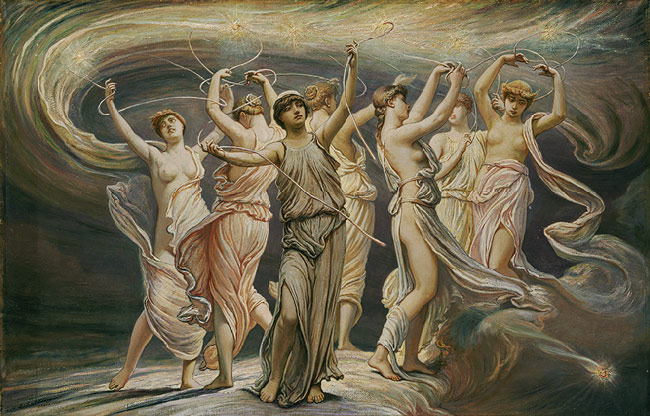
Images: The Pleiades, 1885. Elihu Vedder (American, 1836–1923) Oil on canvas, Garden photos and digital bee collage ©RoxanaVilla,

Monday, January 4, 2010

As Noted


I often get asked to "reveal" more of the notes in my perfumes. When this query is presented I wonder what exactly is being asked. For example is it the fragrance notes or the ingredients that the enquirer is interested in? If it is the fragrance notes then I ask them, "Well, what fragrance notes are you perceiving?" After all, perception is an act of creation. Each persons perception will be different based on their life experience. Who am "I" to tell "you" what to smell?


I use accords/chords in perfumery formulation. These have been created in advance. Each accord has at least six different ingredients. Some accords have several accords within them, my Leather accord is the most complex containing about three accords within that one accord. Perfumers, like artists, have different modes of working. Some perfumes have simple formulas with three top notes, three middle notes and three base notes. This is the system that Mandy Aftel taught back in April of 2002 when she was here at my home facilitating a Natural Perfumery Workshop to a small group. Even further back when I studied with John Steele he had us creating perfumes with a few simple notes including a methodology similar to the top, middle and base approach.
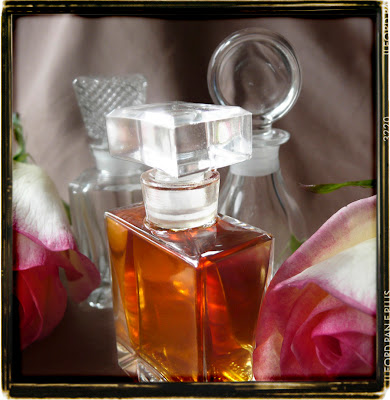


The formulas in my perfumes are extremely complex. Rosa liquid perfume has four different accords contained within her, Sierra liquid also has many accords. Even Sierra Solid Gold has a few of the same multiple accords as her liquid counterpart as well as an infused oil accord made with the intention of prosperity. Each Illuminated Perfume has at the very least one accord.

For the materials used I prefer to state what is contained, compared to what is not. However, traditional thought processes still seem to want the not. Thus...lets begin with what is used in Integral Perfume:
  • Organic Grape Spirits and Organic Grain Alcohol distilled in Oregon, both beverage grade.
  • Essential Oils, Absolutes, Concretes and C02 extracts primarily from plant matter. The only essences that are not from plants are: Beeswax, Honey, Seashells and Seaweed. GreenWitch contains a very small amount of Africa Stone, which is the fossilized excrement of a small mammal in Africa. I utilize "whole" essences in keeping with the concept of Gaia and Holistic Aromatherapy.
  • Golden Jojoba Seed Oil.
  • Organic, unfiltered Beeswax, from local sources including bees I am tending.
  • Plant infusions and tinctures, some from my own native plants.
What I do not use:
  • No animal ingredients (except for a tad of Africa stone), nor do I test on animals.
  • No isolates, as stated above I only use "whole" essence.
  • No synthetic fragrances.
  • No petrochemicals.
  • No parabens.
  • No phthalates.
  • No artificial colors.
A definition of what botanical perfume is can be read here at this journal by following this link: Botanical Perfume: A Comprehensive Definition.

Then there is this asking of well which ingredients exactly? When I list woods the most common in my palette are Cypress, Cedarwood and Sandalwood. I have a vintage Mysore Sandalwood, Santalum album, from an old growth tree that due to age fell down. I also have some of the distillations from other parts of the world. With Cedarwood or Cypress there are many different types of each and depending on the botanical name, where the plant material originates and is distilled there will be variations in the aromatic profile. For example with Cypress you have the standard as well as an emerald, a jade, a blue and an absolute, each will impart different "notes" to the perfume. So then the question becomes, well which one exactly. That answer gets into propriety information and I will not venture into that territory. My Wood accord has a variety of each of the ones listed above as well as other woods. This can be even more complex if you take into account that there are some woods that do not have a distinctive "woody" note to them.


Some of my accords are vertical, some horizontal and some can be considered complete perfumes onto themselves. This was noted by Andy Tauer when he was here at the studio last year. I had him sniff several of my Floral accords which made him comment that some were perfumes onto themselves and that Vero Kern works in a similar manner. Andy uses the term bases for what I call accords/chords, where as a base for me can mean the carrier as an oil or alcohol or a base note.

There are instances where an infusion, tincture or wax is utilized this imparting a note that is not from the essential oils, absolutes, c02 extracts or concretes.

Now you are wondering how this question became so complicated when you just wanted a simple answer. Regrettably, as you can see the answer is not simple unless you look at my very early formulas when I was taking the leap from Aromatherapy into Natural Perfume. Here is an example of a simple formula I made in the 1990's at a class in Malibu with John Steele: Spikenard, Patchouli, Vanilla, Jasmine, Elemi, Nutmeg and Grapefruit.

Vespertina™ liquid perfume is a good example of how there is a specific fragrance note that is not an ingredient. Although there is no Orange Blossom in the perfume it is repeatedly cited as the main fragrance note. In fact, just recently on the Fragranticia blog, Michelyn Camen stated "Roxana Villa’s intoxicating orange blossom and floral Vespertina perfume..."

To list every single ingredient in each of my perfumes would be daunting and provide no meaningful information. The more important questions are: Do you like the fragrance? How does it make you feel? What memories are being stirred for you? Keep in mind that the perfumes I formulate are created from whole, vital plant essences used in therapeutic aromatherapy. So the question of "How does it make you feel?" is very relevant.

The big main stream perfume houses decided to use synthetic aroma chemicals created in a lab so that they need not deal with the variety and the dynamic shifts in nature. To supply aromas to the masses for the multitude of fragrance products the synthetic route was chosen since it is predicable and allows for a much larger profit margin. Generally when you see the words Rose and Jasmine in most perfumes it is an aroma chemical that is attempting to recreate the aroma of the essential oil or absolute, some of the most expensive raw materials in perfume.


Getting back on track here with authenticity and the notes in my perfumes I have created a list to make things a bit easier for those craving more in depth notations into each of my perfumes. Indeed, I do not reveal all my actual ingredients. It's the mind that wants the list of ingredients, it's the heart and soul that devours the fragrance. I invite you to let go of the mind and journey to that sensuous and vibrant Garden of Eden.

Roxana Illuminated LIQUID Perfumes
in a base of beverage grade, organic grain and grape alcohol.


Lyra
Fragrance family: FLORAL, ORIENTAL
Twenty different essences including: Amber Accord, Jasmine, Ylang Ylang and Citrus.
Review of Lyra Liquid at The Pink Room

Aurora
Fragrance family: FLORAL, ORIENTAL
Amber Accord, Jasmine, Rose, Spice and Mandarin.
Read Divina's review at the Fragrance Bouquet here.

Q
Fragrance family: WOOD, CHYPRE
Resin, Wood Accord, Italian Bergamot, tinctured Coastal Live Oak leaves
More info about Q here at the journal
Reviews of Q perfume
Article from the Topanga Messenger: The Oaky Scent of Philanthropy
Q is featured at the Examiner.com - USA
A portion of the proceeds from the 7 gram flacon supports the California Oak Foundation.

Chaparral®
Fragrance family: WOOD, INCENSE
Frankincense, Wood Accord, Sage, Bay.
A percentage of proceeds from the sale of the 7 gram flacon supports The Chaparral Institute

Sierra
Fragrance family: WOOD, CONIFER
Wood, Resin, Conifer, Citrus and tinctures including sustainably harvested Redwood bark.
This perfume contains a total of three accords with accordds within those accords.
Memory and Desire, Entirely Green
Lucy of Indie Perfume on both Rosa and Sierra.

Vera
Fragrance family: HERBAL, FOUGERE
Ingredients include:
Wood, Resin, Bees Honeycomb, California Lavender and Sage, French Lavender, Bay, Citrus, a faux Ambergris accord I created and two of my own tinctures of Lavender and native California Sage.
The primary fragrance notes include:
Lavender, Orange blossom, Hay, Honey.

Vespertina™
Fragrance family: FLORAL
Main Notes: Precious Woods, Frankincense, Patchouli, Rose, Jasmine, Spice and Citrus.
Read Divina's Review at the Fragrance Bouquet

Rosa
Fragrance family: FLORAL
Leather Accord, Vetiver, Precious woods, Rose, Rose Accord, Citrus.
There are two accords in this perfume, the Leather accord contains several accords within it.
More about Rosa here at the journal.
Lucy of Indie Perfume on both Rosa and Sierra.

The perfume devoted to Peace
Fragrance family: FLORAL, ORIENTAL, GOURMAND
Vintage Sandalwood, Tobacco, Vanilla Orchid Bean, Champa, Blue Lotus, Clementine, Ginger, Neroli.
Info here at the journal with links to Scent impressions from the blogging community.
A percentage of proceeds from the sale of the 7 gram flacon compact support Project Peace of Earth

In 2010 expect GreenWitch and the debut Cimbalom and Page 47 as liquids..and a few other surprises.

Overall Reviews:
Heather of Memory and Desire, Perfume in a Poem Project
Read Gaia's Review at The Non-Blonde Part One and Part Two
Helg at Perfume Shrine

Roxana Illuminated SOLID Perfumes
in a base of unrefined beeswax, golden jojoba oil and infused oils.


Lyra
Fragrance family: FLORAL, ORIENTAL
Amber Accord, Jasmine, Ylang Ylang and Citrus.
Review of Lyra at Scent Hive

Aurora
Fragrance family: FLORAL, ORIENTAL
Amber Accord, Jasmine, Rose, Spice and Mandarin.

Q
Fragrance family: WOOD, CHYPRE
Resin, Wood Accord, Italian Bergamot, infused Coastal Live Oak leaves.
A portion of the proceeds from the solid perfume compact supports the California Oak Foundation.

Chaparral®
Fragrance family: WOOD, INCENSE
Frankincense, Wood, Sage and Bay, tinctured Coastal Live Oak leaves, wood and sage.
Read more about Chaparral® here at the journal
Toms Review at Perfume Smellin' Things
A percentage of proceeds from the sale of the 7 gram flacon support The Chaparral Institute

Sierra Solid Gold
Fragrance family: WOOD, CONIFER, GOURMAND
Frankincense, Myrrh, Wood, Conifer, Rosemary, Spice and Citrus.
Ingredients include: Frankincense, Myrrh, Cedarwood and a Prosperity infusion.
Read more about Sierra Solid Gold at this link and a link contained here at the journal.
Praise for Sierra Solid Gold at The Frisky.

Vespertina™
Fragrance family: FLORAL
Precious Woods, Resin, Rose and Citrus.
Read Beth's piece at Perfume Smellin' Things about the fragrance and it's inspiration.

Cimbalom
Fragrance family: FLORAL, ORIENTAL
Labdanum, Indonesian Patchouli, Indian Jasmine, Ginger and Orange.

Terrestre
Fragrance family: WOOD, CONIFER
Precious Oud, Labdanum, Cedar, Patchouli, Distilled Indian Earth, Vetiver, Indian Rose and Galbanum

The perfume devoted to Peace
Fragrance family: FLORAL, ORIENTAL, GOURMAND
Three separate accords including essences from each continent, included are Vintage Mysore Sandalwood, Tobacco, Vanilla Orchid Bean, Champa, Blue Lotus, Clementine, Ginger and Neroli.
Info here at the journal with links to Scent impressions from the blogging community.
A percentage of proceeds from the sale of the solid perfume compact support Project Peace of Earth

In 2010 Vera and Rosa will debut as creamy solid unguents and more from the Chocolate series. I am also developing Body Butters and a few other scented delights.


Thursday, May 22, 2008

Purple Haze


I power walked up the steep street which leads to the Santa Monica Mountain trails early this morning. The birds were singing, bees a humming and as the landscape shifted from homes to plant life the scent of white sage filled my lungs.

There are areas of the mountain with clusters of the native sage shrubs, Salvia apiana, which give a soft purple cast to the side of the hill. It is quite stunning. Best to appreciate it now before the city comes in to clear cut all of it as fire prevention. I am not fond of them doing this. I’d rather they mindfully go in and remove all the deadwood and non-native mustard. The
Salvia apiana, is a member of the California Chaparral Biome and held sacred by the Native People of America. It is the sage often used for smudging. We use it as our incense for its warm and woody fragrance.

Our perfume Chaparral, consisting of botanical essences and handcrafted tinctures, is starting to run low. Inhaling the fresh, woody aromatics of the landscape, I contemplated deepening the palette of this fragrance.

It’s time to go on a hike with Meghan, Queen of the Chaparral. Meghan is one of my girlfriends who has a deep connection with the flora and fauna. She is adept at tracking and embodies earth element. We’ve been attempting getting together since she returned from a sojourn in South Africa. The time is ripe!

Roxana Illuminated Perfume™
Chaparral Botanical Perfume
The Chaparral Institute

Tuesday, June 9, 2009

The Shadow

We watched the film Interview with the Vampire last night based on the 1976 best selling novel by Anne Rice. I had been hesitant in viewing this film, like most horror-like themed stories, it's just not my cup of tea. I prefer Earl Grey to blood. However, swayed by the prospect of gazing upon Brad Pitt, I conceded knowing that if I got too uncomfortable I'd retreat to the studio.


Indeed, the blood is a bit much, however the story of the archetypal hero battling his demons is always good food for the soul. The film is gorgeous cinematically, with exquisitely crafted scenes, glorious costumes and beautiful people. The underlying skeleton of a good story has been very well transcribed into a film by Neil Jordon. As mentioned, I haven't read the book or any of the authors works, despite numerous accolades from friends.

Carl Jung speaks of the embracing our shadow side, our unconscious, basic instincts which drive the animal aspect of our nature. At a gathering almost a year ago a dear and very wise friend mentioned that America may finally be embracing their shadow side. Well, we'll see about that. From the point of view of personal growth and empowerment I rather like the idea of it, yet wonder if it is possible. Perhaps this earthly manifestation is meant for the polarity of the struggle, as we see with the Brad Pitt character, Louis. The play of night and day, light and dark, male and female, birth and death may in fact be our constant. All we can do is take a deep breath and embrace it.

While taking that deep breath one might as well add a few essences into the field of inhalation that will assist self awareness. Valerie Ann Worwood, authoress of several aromatherapy books. In The Fragrant Mind, on she suggests the following essential oils for self awareness:

Clary Sage
Cypress
Pine
Ormenis flower (Maroc Chamomile)
Pimento Berry
Clove
Coriander
Sage
Myrtle
Ylang Ylang
Geranium
Sandalwood
Bay
Jasmine
Mandarin
Angelica Seed
Cistus

Now, as a perfumer, I look at this list and ponder if a botanical perfume could be made here. There are several avenues that present themselves, one of which would be a perfume in the fragrance family of leather. A leather fragrance would indeed be appropriate for a vampire, especially one like the nemesis in the story, Lestat. However, I'm more interested in the sensitive character of Louis. We will however build upon the dry, woody character of a leather fragrance.

Let's begin by looking at potential base notes that we will build our structure upon. I'd begin with Sandalwood and Cistus, with Cypress as a fixative and Pine absolute. The fruity notes of the Pine absolute will work nicely with those of the Chamomile. The herbaceous aspect of the Chamomile then opens the terrain for Bay, Sage and Myrtle and Angelica Seed. I then would dip a scent strip into each of these essences and experience the aromas together to inhale the potential in this formula. From what I can "see" we would need to bring in more heart notes. The Jasmine, Ylang Ylang or Geranium probably would be a bit off in this schematic, those would work in a more sweet leather formula. Orange blossom or Rose might be a nice addition if you wanted to add florals to the heart note. Mandarin, Pimento Berry and Coriander could be nice accents for this rather woody, herbaceous melange for becoming more self aware with every breath we take.

I'm choosing Chaparral Solid as my scent of the day. The fragrance contains many of the notes mentioned above and I am feeling a strong attraction to it's dry, woody character.

Ah, and along the theme of death you may be interested in visiting the Corpse flower at the Huntington Library. It is about to bloom and offers up the decadent Scent of Death for your olfactory delights.

Friday, March 13, 2009

Scent of the Day: Lucky 13


Since it's Friday the 13th I thought I'd post wear something that relates to lucky 13. My research makes it's way to essential oil associations with luck to come up with todays fragrance. This takes me to "Aromatherapy for the Family" by Jan Kusmirek. Jan has an Index of Mental/Emotional Symptoms on page 24 of this little book.

So, I am pondering what mental/emotional challenges would block someone from luck? Hmm, that would be very individual. I'm thinking and feeling that the essences that would be most relevant are: Clary Sage, Frankincense, YlangYlang, Orange.

Courage: Frankincense, which also works on Perseverance, Paranoia and Self-criticism

Change:
- coping with: Ylang Ylang
- difficulty in adjusting: Clary Sage
- difficulty in making: Orange

Anxiety: Cedarwood, Chamomile, Clary Sage, Frankincense, Geranium, Juniper, Lavender, Marjoram, Rosewood, Sandalwood Tangerine, Orange, Ylang Ylang

Keep in mind this is specific to "essential oils" not fragrance oils or synthetic perfume.

The other aspect of luck to check out is magical associations. For this I defer to many of the same references I used when I created the prosperity accord contained in Sierra Solid Gold.

Some of the fragrances (includes essential oils, plant materials and synthetic aromas) associated with Luck according to Scott Cunningham include: Allspice, Calamus, Fern, Hazel, Heather, Irish Moss, Nutmeg, Orange,Poppy seed, Rose, Spikenard, Star Anise, Tonka, Vetiver, and Violet.

The planet connected with luck is Venus, thus all plants associated wiht here would be a great addition. Here are a few: Rose, Orris, Myrtle, Tonka, Tuberose, Ylang Ylang, Vanilla, Rose Geranium and Tonka. Another rather synchronistic item here is that Venus is the planet for Friday!

Well, based on the information gathered here, I suggest Vespertina as our scent of the day. The botanical perfume Vespertina many of the essences discussed and also contains a vibrational aspect of Venus.

This has been terrific to write, I am currently working on a perfume for the Equinox. I have now added a Lucky perfume to the list. Stay tuned on this blog or twitter for their release.

Thursday, December 30, 2010

Best of 2010


Round and round we go, spinning through the Universe on planet blue while breathing in deep. The end of the year is upon us and I am here to share some of the highlights of the year scented, unscented and within other realms of beauty and art. This entry is one segment of a collective blogging circle organized by Trish of Scent Hive, please see the links at the end of this post to travel onward to the other participants.


Before embarking on our journey much gratitude goes out to all those who supported my work. I am deeply touched and humbled by the fabulous write ups, sweet notes and inspiring messages. Merci beaucoup!

"There are moments in our lives, there are moments in a day, when we seem to see beyond the usual. Such are the moments of our greatest wisdom. If one could but recall his vision by some sort of sign. It was in this hope that the arts were invented. Sign-posts on the way to what may be. Sign-posts toward greater knowledge." ~ Robert Henri

The most significant sign post marking the pilgrimage through 2010 for me was the arrival of the honey bees in May. What a fascinating adventure they have taken me on and continue to do so. These little winged alchemists grace me with an even deeper understanding of the circle of life.

"Even the smallest being can change the course of the future."
Modified from a Galadriel quote


My favorite gadget this year is the Nikon digital camera belonging to Eve. One day soon I'll have my own, for now she has been very generous in sharing.


The best plant and aroma in my native garden also happens be my favorite essential oil this year. Sage. I started using sage essential oil early in the year when a rather intense respiratory challenge entered the scene. For some reason I reached for the sage instead of eucalyptus and I haven't looked back. Meanwhile in the garden all the different native varieties are doing really well with little water, no fertilizer and planted in clay soil amongst abundant gopher activity. The fragrance is pure heaven and the honey bees adore the flowers. Now if I could just get the neighbors to stop using stinky dryer sheets that pollute the natural aromas of the native landscape, sheesh!

The best perfume adventure was a visit with Julie Elliot at her In Fiore shop in San Francisco. Julie was an early mentor as I began placing all the pieces together to launch my line. She has impeccable taste, is the most grounded and ethical person in the natural perfume community, and offers a skin care line that I lust for.


Intending 2011 is filled with the sweet aroma of love, beauty, joy and prosperity for each of you. I'll post shortly what I intend to manifest in this upcoming New Year.

Other blogs
participating in the "Best of 2010" organized by Trish of Scent Hive, Screibman's Live, Portland Fragrance Examiner, All I Am a Redhead, CaFleureBon, The Non-Blonde, Smelly Blog, I Smell Therefore I Am, EauMG, DSH Notebook, A Rose Beyond the Thames, Persolaise and Sorcery of Scent.

Wednesday, December 15, 2010

Let it Bee


The day began very fortuitous when I found Russian sage plants on sale for $10 at my local nursery Boething Treeland. I was there foraging for a Live Christmas tree when I not only found lots of native California trees to choose from and the Russian sage, Perovskia.

While the fellow wrote me up I told him how much my honey bees like the Russian sage and I'd be back with my truck for more. To my surprise he was very knowledgeable about honey bees and taught me quite a bit in just the small time it took him to write up my order.

Perhaps someone slipped a little Felix Felicis in my English breakfast tea this morning or did I put some Sierra Solid Gold on today?


When I arrived back at the studio there was an e-mail from my locket supplier informing me that the perfume lockets are on their way. Hooray! Although they won't be here in time for Christmas I'm thrilled that they are coming. Now...how 'bout them perfume compacts Santa?

Fortune number three, I've just heard that Bee keeping is now legal in Santa Monica! What fabulous news, now perhaps the City of LA will follow suit. If not then perhaps it's time to move to Santa Monica.


Back to making solid perfume.