Showing posts with label native plants. Show all posts

Thursday, July 30, 2015

Oak Tree Circle


Yesterday, just as I was about to head off to the perfumery a gardener with a chain saw almost starting going at the oaks on the neighboring lot. We were able to fend off the fellow by taking photos and calling the police. Since I'm not sure if this method of protection will be sustainable I am asking each of you to encircle the seven trees in love and protection. If you have some Q Perfume than please anoint yourselves with this elixir devoted to the California oak.


Q
Fragrance family: WOOD, CHYPRE
Main notes: Resin, wood chord/accord, Italian bergamot, tinctured Coastal Live Oak leaves


Return of the Light
A New Green Cloak
Q Queurcus agrifolia - Reviews
+Q Perfume - Review
Celtic Lunar Month Oak - Reviews & Links
Ode to Trees
Celtic Lunar Month: Oak
Q Review - Review
The Green Man
A Secret in the Forest
The Duir Way
Save the Oaks
Scent of the Day: Oak
Spirit of Nature
Medicine Wheel


Tuesday, July 7, 2015

Spring in Summer


Some of the plants in my garden are acting as if its Spring, even though we are in the middle of Summer. I'm guessing this is due to the extremely weird weather coupled with a little extra watering with our shower water. If you didn't know, California is having a massive drought and thus we are suppose to be mindful about our use of H20. Here at the woodland cottage we take showers with tubs and buckets to collect the water and use for our plants.


The fairy duster planet we put in the ground back in the Autumn of 2012 or so has gotten quite large, has had some children and is FINALLY attracting honey bees. Yay! For a little while there we thought there was something wrong with it. I am not sure why it took so long, but, relieved that the reason why we purchased it is now manifested. Judging by how many honey bees are on it all day long I'd say hands down its the favorite plant in the entire garden.


I love how the flowers of the Fairy Duster first appear like little balls of yarn which slowly unfurl into their magnificent red strands that then call over all the different pollinators.


The Matilija poppies, which didn't flower last year have now started to bloom. I thought they weren't going to produce flowers this year because in the neighborhood and other parts of the Santa Monica Mountains they were blooming back in Spring. Ours generally bloom in July, thus I'm thinking it must have to do with where they are placed. Something else that is happening with these is that they are spreading. This is exactly what we wanted! In a few years we are hoping that they will be covering a quarter of the front slope.


Other positive things happening in our garden is that lots of natives have been coming up on their own accord, like Quercus agrifolia, our native oak, and Artemisia californica. This is especially potent since our neighbors continue to hack down large grandfather oaks in the area. When I see people cut down those ancient trees I can't help but think humans are one of the stupidest species on the planet, really. I mentioned to Greg that before allowing someone to purchase a house here in the woodland people need to be asked the question "Can you be a steward of our woodland flora and fauna?" If not, than hey, go find another seat on this airplane.


Sunday, June 21, 2015

Everlasting


Friday evening, during the Street Art Live event at Wizard (Whizin) Center a gentle soul who auspiciously resembled Frodo came by the perfumery. We began chatting and soon found we shared a love of plants, specifically those of the California wildwoods. My friend Marie, who was spending time with me at the perfumery that evening, commented on how it seemed like a visitation from Middle Earth to the Elven/Fairy realm...she believes me to be part fairy.


Eventually we ended up trading small bunches of Everlasting which also goes by the names of Immortelle and Helichrysum. He gifted me a Gnaphalium, also termed cudweed, which might be the bi-color variety. There's quite a challenge with determining the exact name since so many sources don't agree. For our purposed today lets call it Gnaphalium bicolor, a two-toned greenish perennial with sticky, woolly-white leaves that contain grey undersides...thus the secondary name of bicolor. Gnaphalium comes from the Greek meaning "lock of wool", relating to the woolly-leaves.


The elongated, dual toned leaf contains a superbly interesting aroma with notes of valerian, sage, patchouli and agarwood. Being a lover of earthy and unusual notes I'm loving it and enjoying the difficulty in pinning down the aromatic profile, particularly since it doesn't quite share similarities with its relative that goes by the same common name of Helichrysum italicum. The little papery flowers are small and creamy yellow in color with a very subtle herbaceous scent.


I gifted him Helichrysum italicum (angustifolia) organically grown in Ojai. This variety has a maple-like fragrance with very similar looking flowers to Gnaphalium bicolor although the color is golden yellow.

The other native varieties to California, that are often confused is Pearly everlasting, Anaphalis margaritacea and California everlasting, Gnaphalium californicum. The latter grows abundantly here in the Santa Monica Mountains and has a sister plant on the East coast called "White Balsam" Gnaphalium polycephalum.


Everlasting has such a perfect affinity with the Summer Solstice today as it is a plant of the Sunflower family (Asteraceae) and thrives in full sun and dry, arid hillside regions with little flowers that emulate the look of our fiery golden star which gives us light and warmth called the Sun. The word Asteraceae comes from the Greek Aster meaning star.


Roxana Illuminated Perfumes featuring helichrysum are Impromptu and the upcoming Mellifera which is found at my fan funding page or the perfumery.

Photos and text: ©Roxana Villa

Monday, March 10, 2014

The Birds and the Bees


The heavy rains from last week gave our very dry earth a much needed soaking producing a few blooms in the garden.


The girls have been hard at work collecting nectar and pollen. A hive check is over due, which will likely result in a frame of honey or two.


The Cistus is flowering. I went out to photograph the blooms in the afternoon and saw the petals on the ground, seems I've got to get out there super early in the morning if I am going to capture a photo of the flower without sunshine hitting it. The evergreen shrub, also known as Purple Rock Rose, is not a California native but tolerates drought, poor soil and little maintenance like its neighboring plants.


The front slope is finally filling out a bit. The wild roses and Matilja Poppies (pictured above) have been spreading on there own, while animals have been seeding here and there.


Meanwhile, the succulents that were planted on the lot by a previous owner are doing quite well. I'm not particularly found of them since it perpetuates the myth that cactus are California native plants. Greg really likes them though, so we are putting them all along the fence side of the driveway where the slope doesn't need strong roots.


Saturday, February 8, 2014

Getting it right "down under"


Here in Los Angeles where we have a major drought occurring consciousness about the importance of native plants and honey bees continues to be extremely small, concurrently down under in Australia, they are light years ahead of us. This morning, Lisa Novich of the Theodore Payne Foundation sent out  this link to an article in the Huffington Post titled "They're Getting It Right "Down Under" and the U.S. Should Follow Their Lead."

Meanwhile, last week I attended a meeting in Van Nuys that was specific to building along the Mulholland corridor. I was there with several of my other neighbors speaking in opposition to a project that a developer is attempting to build on a extremely sloped site down the street from our home. We've been opposing the large McMansions that developers have proposed for the site for years.

One of the many developers was given the A-ok by the board and thus cut down four large oaks and other natives. It was a devastating defeat. Then the developer choose not to build, which felt like salt had been rubbed into a wound since the oaks had been removed for no reason.


Another turn in the story occurred when a new developer came on the scene in July and hired some hacks to remove the stumps of the oaks which had started to grow back. The neighbors were ignited, we called the police, the fire department and the city. Kelly Lewis of the Urban Forestry department for the City of LA deemed "Those are old stumps not trees and they are not oak trees."

This is just one small example of the ignorance that exists within the City of LA, particularly the Urban Forestry department where an individual can't even recognize a native tree!

At the meeting this week the developer presented his "French style, country mansion", that resembles a big white box to the board. He went on and on about how much he wants to work with the neighbors and create a beautiful home on the lot that fits with the rural quality of the area. After he presented the project there was a period of "comments" by those who had filled out cards. I was one of those along with about five others within the neighborhood including a local community council member. We each spoke on different points of the impact the project would have on the site and within the community. It was pointed out that since the oaks and their root system had been removed the slope was now extremely unstable and a new soils report would need to be done, particularly since the project required several retaining walls.


Gordon Murley, the President of our neighborhood homeowners association, pointed out how the project violated several of our local ordinances. I was there, like the Lorax, to speak for the trees. I mentioned that the plan shows only three oaks being replanted although that under the ordinance sixteen were to be replanted to make amends for the trees that had been removed. I also stated that our city is called "Woodland Hills" because of the trees and that continued devastation to our local oak forest was a travesty to our community where too many oaks had already been removed. I also brought up the importance of the oaks to the rural aesthetics of the area and the inherent value oaks add to biodiversity. Regrettably my words of wisdom fell on deaf ears.

Even more salt was rubbed in my wound when the developers "mock arborist" stated that oaks are a fire hazard. This is one more ignorant phrase I've heard repeated often. The truth is that oaks and other native flora contain a much higher ignition rate than non-natives because they have evolved within a dry arid climate and know how to store water.


Ultimately the board shot down the proposal due to the fact that a "French country manor" type box fit into a slot doesn't work within the very eclectic, rural area within the hillside. So now the developer will need to go back to the drawing board and, if he chooses, present his project once more in conformity with the boards suggestions.

It was an incredibly depressing night for me, clearly quite a lot of work needs to be done to ignite some of that the consciousness we are seeing down under.


Thursday, January 30, 2014

Night blooming and heady!


In the woodland today skies are grey with a chance of rain and the rich, heavy fragrance of the night blooming pink jasmine is in the air! The aroma of this jasmine is much heavier and sweeter than the sambac, in fact, it is so strong that I can't tolerate too much of it or I get a headache.


Everything is blooming about one month early this year because of the strange warm weather we've had. The challenge with this, especially the fruit trees, is the danger of frost in the next few months.


In other local news, a developer has decided to build a monstrous box on the site where the native oaks were cut down. I've spent the morning looking over the plans brought over by a neighbor. There are all sorts of challenges with the building plans that go against existing codes for that particular property. The landscape plan was particularly interesting since it is mostly California natives. The problem however, is that they've chosen plants which are native to the Bay area not here in the sunny, hot woodland of Southern California. (Hello?)

Clearly the landscape designer, which by the way has the same last name as the contractor, didn't expect to have a local resident and lover of native plants looking over her design with a fine tooth comb.

Our landscape design is mainly California natives, the back slope is covered with rosemary which I am very happy with since the bees adore it. All my jasmines, exotics and medicinal plants are in pots. We've chosen native plants...or perhaps better verbage is "the native plants that have chosen to be in our garden design" tend to grow in the local woodland and our beloved by the local fauna and flora. This is my vision for every house in the neighborhood, imagine what a fabulous and positive environmental impact that would be!


Wednesday, January 22, 2014

In the Garden: Early Spring


Here in the Southern California woodland Spring arrives early, even when we've had little to no rain. The first flowers to appear our on the back slope covered with rosemary, these begin to blossom as early as November. Right now the purple sage, botanically known as Salvia leucphylla, is blooming and the girls are all over it in the morning. I've noticed the honey bees tend to prefer plants when they are hit by the sun, at least in the morning at this time of the year. Probably because they are elemental beings of the sunlight.


I patiently observed them this morning, waiting for the perfect moment to capture one of them at work. On Monday while when I was doing this I got a shot in the arm by one of the girls, not quite sure why (!) but I figure little doses of api therapy are always good as it is used in Europe to assist a wide variety of ailments.


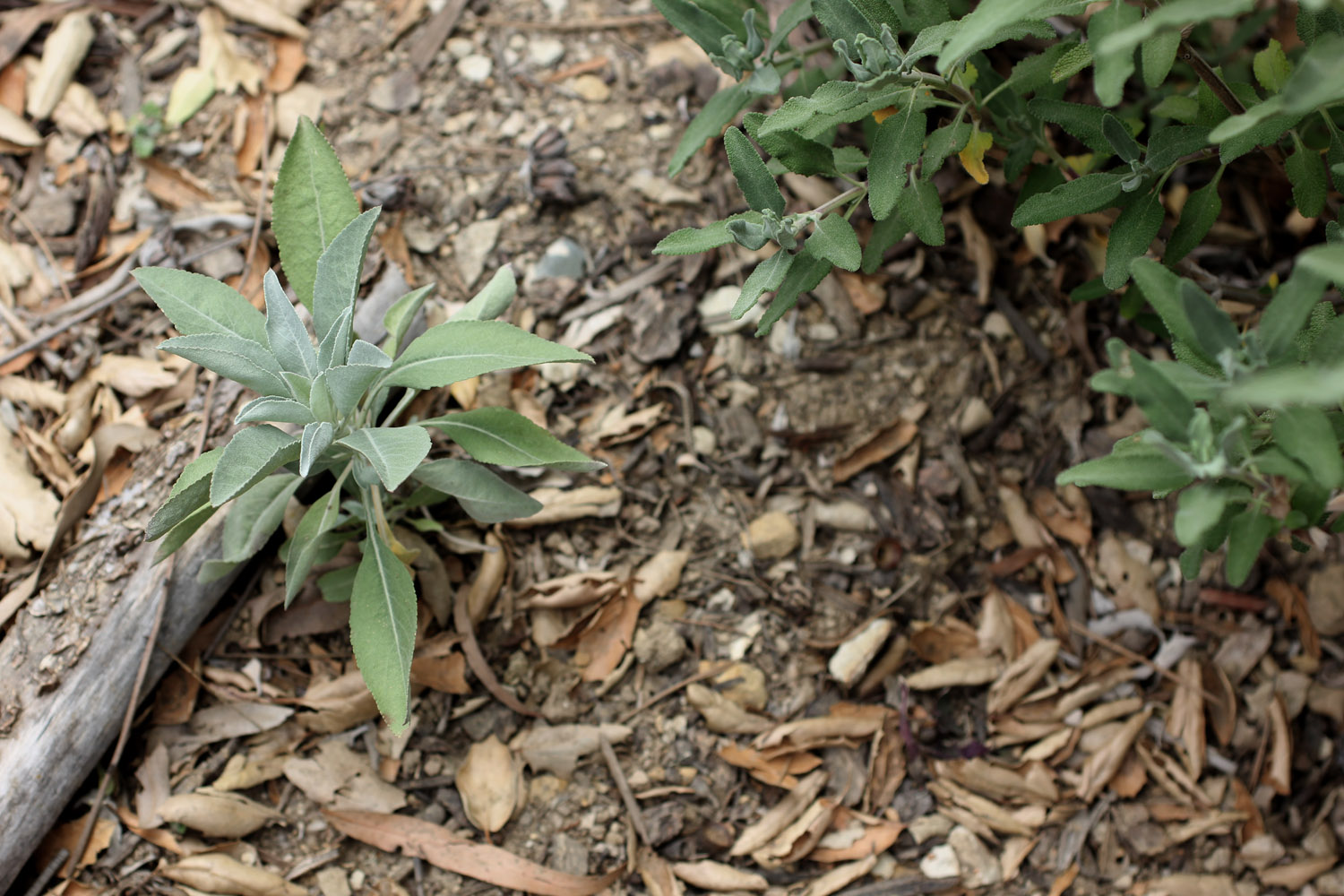
The reason this particular salvia does so well in our garden is because it likes clay soil, something of which we have in abundance. Besides being a great plants for bees, butterflies, and hummingbirds, the native quail love the seeds. Once established it needs no water!

This one is on my list to get more of, in fact, might be good to get a bunch of them!

Friday, June 14, 2013

The Wood Land


I woke up Thursday morning to the sound of chainsaws echoing through the woodland. When I hear this sound I become a bit distressed because every so often it is a neighbor taking down an Oak, or some other native tree like the grand Sycamores.

After breakfast I became so agitated by the sound I decided to go off and investigate. I put on my hat and headed off toward the sound. Sure enough I found the source but couldn't get a good enough view to see if they were cutting down or trimming the large, ancient oak on the property. This particular neighbor has taken down oaks before, usually on the weekend when it is difficult to get someone out here to stop them, thus I was very worried.


 As I attempted to get a better look from the street a neighbor from another home came out and asked if I needed help. I explained to him that I was concerned that the person with the chain saws might be cutting down an oak tree. He immediately launched into a story explaining how last week he tried to stop some unlicensed tree trimmers who were digging up oak stumps from a lot just up the way. Then he invited me in to look at the pictures he had taken, which I have included in the post.

The lot that these oak stumps were being removed is one of many that greedy developers have decided to take oaks out before getting their plans approved. A despicable act that occurs quite often, despite that the developers don't end up getting what they want. Usually a ten year moritorium is put on the lot before they are allowed to build. This causes them to sell the lot which then brings in a new developer. It's a vicious, re-occurring circle.


In the case of this particular lot, one of my oak protector buddies came out to video tape what was taking place and told the tree trimmers that since the stumps had new growth they were not allowed to take the stumps out. Another neighbor called the police and the stumps were saved, for now.

Although the economy doesn't seem to be getting better, I'm thinking it must be if the developers are swooping into the woodland once more. This will require all of us in the Oak tribe to organize and work together to protect the few grandfather oaks that still exist in this little patch of woods.


I created the fragrance Q (for Quercus) as my way of making art to deal with these hideous folk who take out the native oaks. Besides making art and organizing the neighbors I'm not sure what else I could possibly do, thus here I am writing to get the frustration out of my system.


Tuesday, April 9, 2013

California Native Plant Tour 2013


The 10th Annual Theodore Payne Native Plant Garden Tour took place Saturday & Sunday. More than 40 gardens in the Los Angeles region, each planted with at least 50% California natives were showcased.


During a visit to a patio garden in Santa Monica I heard the host talking about a honey bee with "blue knees." I bent down to take a look and sure enough the little feral bee had blue violet pollen sacks! I'd never seen anything like it before. I'm intending that the blue is due to the color of the pollen from the flower and not a toxic pesticide or fertilizer. The wildflower the bee was gathering nectar from is Gilia capitata  a species of flowering plant in the phlox family, native to western North America.

Garden 4 in Burbank
The photos below is from a garden that was surprisingly planted during the high summer heat of July, one of the worst times to plant natives, yet they survived due to a very diligent gardener. Here's the text from the tour website:  "They killed their lawn! This two-year-old, owner-designed, 1250 sq. ft. front yard is now a thriving wildlife habitat and gathering place for family and entertaining—and a showcase for colorful, fragrant native flora, water conservation, and energy and waste reduction."


Anacapa Pink Island Morning Glory hedge in Burbank, the honey bees love this plant. 
I'm considering planting this one where our non-native morning glories are failing.


The house in Burbank had quite a lot of wildflowers, this fuzzy, 
golden section beauty above and below is called Caterpillar Phacelia, Phacelia cicutaria.


On Sunday we traveled over the hill to the Santa Monica area. Garden 26 in Brentwood  This garden is "a two-year-old 2,000 sq. ft. front yard of sage, buckwheat, penstemon and other drought-tolerant natives that provide color, support wildlife and tolerate heavy soil. Enhancing the scene is a very old coast live oak that elegantly overhangs the driveway. Drip irrigation and a weather-smart controller complement green elements of the home." This cute 1950's cottage, which has a similar feel to our little house, featured blooming Ceanothus and a small field of native poppies. Due to the owners mindful planting her garden is filled with the song of birds. This garden was designed by Nancy Cipes and Margaret Oakley Otto of Oakley Gardens.


Native strawberry as a ground cover, we planted this one during the autumn 
on our front slope under the oaks, doesn't quite look like this...yet!


 The view of the front garden from the living room window.

 
The welcome mat had a honey bee!


Unfortunately I had too much going on this weekend and wasn't able to visit some of the spectacular gardens located in other parts of the city like Pasadena and downtown areas.

More posts here at the journal about California native plants can be found here.

Wednesday, March 6, 2013

It's happening now!


For the last two months there have been little signs of Spring here in my little wild wood garden. First is the ever persistent non-native grasses, which pop their vital green sprouts up after the first rains in the late Autumn.


While in the Santa Monica Mountains, close to the coast the white ceonothus blooms across the hillsides, my blue variety slumbers...until today! for some reason, this event is always very exciting, I squeal in delight when she surprises me with her beautiful, delicately scented, cerulean blooms.


Meanwhile, the plants and seeds we put into the warm earth of the early Autumn are thriving with lots of volunteer natives making an appearance. In two different locations we have Artemesia californica, cowboy sage, coming up on its own. The wild roses and Matilija poppies are sending out underground shoots and spreading nicely.


Baby oaks are all over the slope, thanks to the acorn fairies, the squirrels.


I can just imagine the excitement in the bees hive, which reminds me, must do a check and add more boxes for the honey flow!